- calendar_today December 3, 2025
Last full moon of the year marks a powerful astronomical event with peak visibility and rare clarity
Global — December 2025:
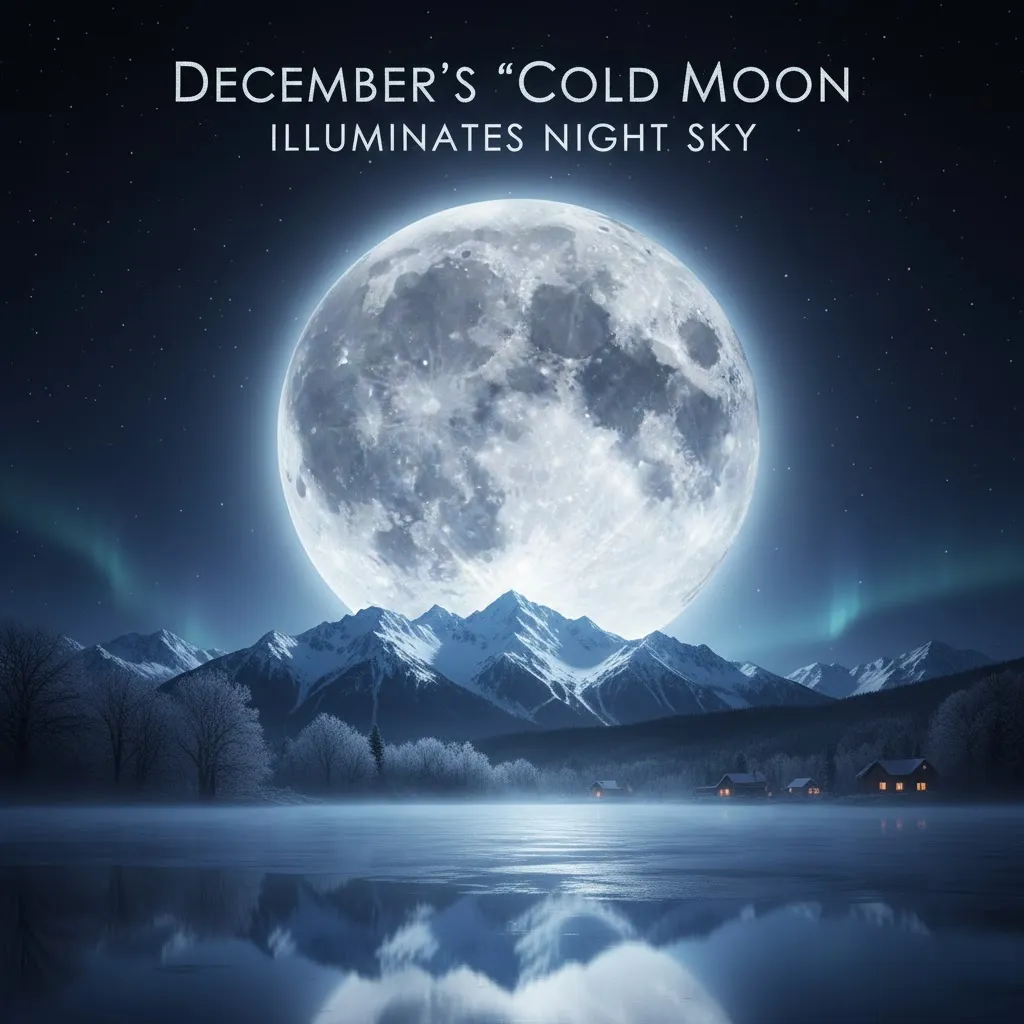
Skywatchers across the world were treated to a breathtaking celestial display last night as December’s Cold Moon, the final full moon of the year, rose in brilliant clarity. Known for its crisp glow and symbolic ties to winter, the Cold Moon reached peak illumination at 9:27 PM IST, capturing attention from astronomers, photographers, and stargazing enthusiasts.
The term “Cold Moon” originates from Native American and European traditions, marking the arrival of harsh winter temperatures. This year’s full moon appeared especially bright due to its position opposite the sun, creating a striking contrast against December’s long, dark nights.
A Rarely Clear December Sky Creates Perfect Viewing Conditions
Unusually clear skies across India, the UK, and several parts of North America allowed millions to witness the moon’s striking halo and enhanced surface detail. Astrophotographers reported ideal conditions as the Cold Moon rose higher and displayed its icy, golden shimmer.
Astronomers noted that this full moon also coincided with the moon reaching a slightly closer point in its orbit, creating what many described as a “mini supermoon effect,” though not officially classified as a true supermoon.
What Makes the Cold Moon Special?
- It is the last full moon of the year
- Represents transition, reflection, and the shift into mid-winter
- Often appears brighter and sharper due to lower atmospheric humidity
- Significantly affects tides as it aligns closely with the winter solstice period
“The Cold Moon always has a magical quality,” said astrophysicist Dr. Meera Rao. “Its timing close to the solstice adds a symbolic sense of closure and renewal.”
When to See It Again
Although the Cold Moon has peaked, viewers can still enjoy its bright glow for the next 1–2 nights as the moon remains nearly full. The next similar celestial milestone will be January’s Wolf Moon, set to appear early next year.