- calendar_today September 1, 2025
Honda has gone a big step—far from roads and into the heavens. Renowned for its robotics, motorcycles, and vehicles, the Japanese behemoth recently made its first major aeronautical triumph by effectively launching and landing a reusable experimental rocket.
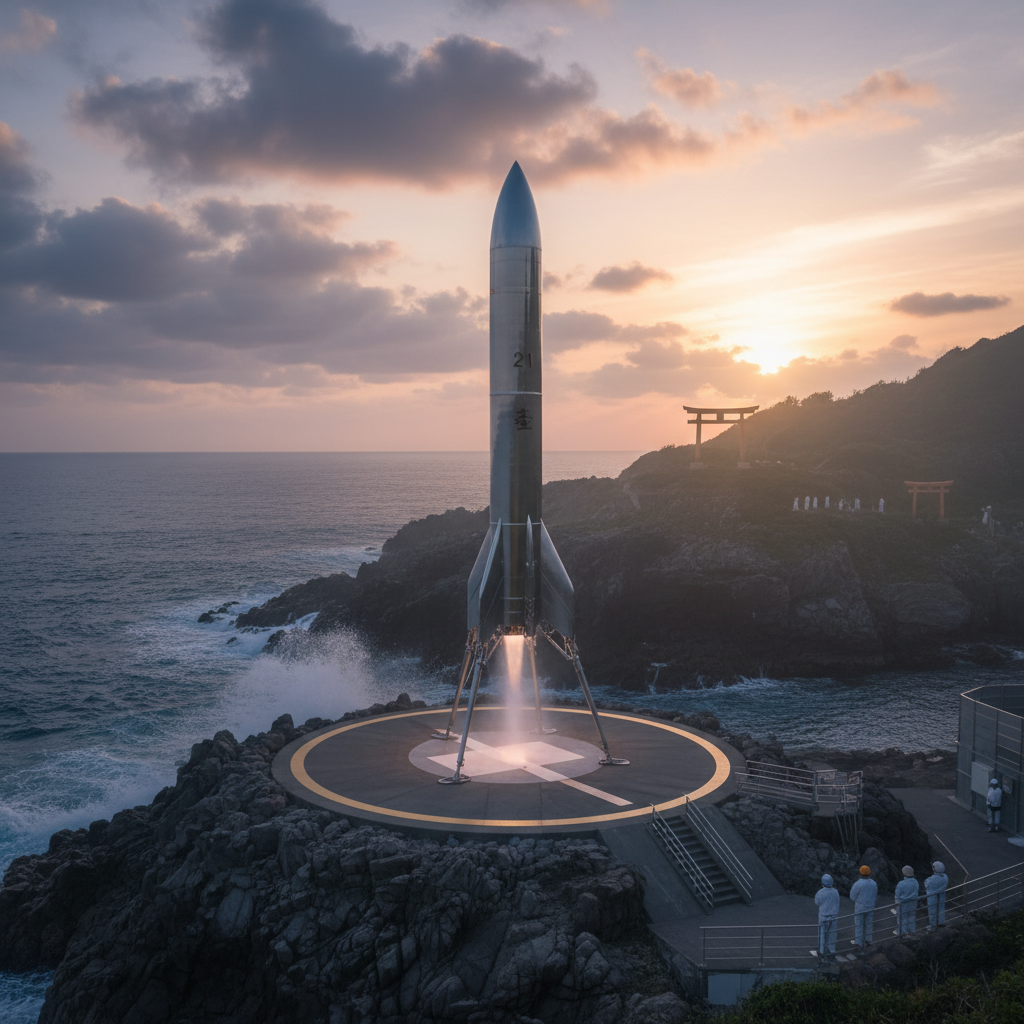
The test flight took place in Taiki Town, a Hokkaido, coastal area. Thanks in part to public-private cooperation and the involvement of companies like JAXA (Japan Aerospace Exploration Agency), the town, although small, is attracting increasing attention as a center of space development. An amazing display of accuracy for a first public test, Honda’s rocket soared 890 feet into the air, stayed airborne for 56.6 seconds, and landed just 37 centimeters from its target.
This was no ordinary splashy experiment. Launched vertically, the nearly 21-foot-tall, 2,800-pound rocket gently touched back down on four retractable legs, so highlighting Honda’s deliberate but subdued attitude to joining the space race.
Honda did not start this rocket project from ground up. Rather, the company cleverly converted some of its most sophisticated technologies—originally intended for robotics and automated driving systems—to build and control its rocket.
Systems used in self-driving cars—such as sensors, artificial intelligence-powered decision-making, motion control algorithms—were modified to handle rocket flight and landing. This let Honda leap forward using what it already knows, skipping years of basic aerospace development.
The emphasis was on making a rocket landable and reusable, not only on flying one. Globally, that is the direction of space technology. Companies like SpaceX have already shown how important reusable rockets are to lowering launch costs and boosting flight frequency. According to Honda’s test, it’s headed in that same direction and gives sustainability and reusability first priority right from start.
Eyes on 2029: Clutching the Edge of Space
This test’s component fits a greater vision even though it did not send a rocket to orbit—or even to space. By 2029 Honda wants to launch suborbially. That implies flights crossing the Kármán line, roughly 100 kilometers (62 miles) above sea level, so defining the official limit of space.
Under nearly-space conditions, data collecting, and technological validation, suborbital launches are invaluable. Though they don’t entail launching satellites or orbiting, they are an essential first step toward more audacious space ambitions.
Honda’s rocket development is still entirely in the research and development stage right now. Although the company has not committed to commercializing this technology, its possible uses definitely catch its attention. Having the capacity to use satellites for communication, navigation, and data services will eventually help Honda’s more general business operations—especially in mobility, logistics, and autonomous systems—given growing reliance on them worldwide.
Taiki Town was chosen as the launch site not at chance. Aerospace testing is perfect here because of the right mix of low population density, remote geography, and government support. It has drawn interest over time from many businesses searching Japan for secure and encouraging testing facilities.
Now, with Honda’s successful rocket test under its belt, Taiki’s profile in Japan’s space ecosystem keeps climbing.
This was not a space mission with flash. Online streaming of a capsule, astronauts, and a dramatic liftoff was absent. Still, it was far more crucial—a working proof of concept.
Honda can design, launch, and safely land a reusable rocket—and do it with technical accuracy—the test revealed. It also showed how a company with strong engineering background might go from the road to the heavens without decades of aeronautical experience.
Although transportation still holds Honda’s future, that definition is rapidly changing. Whether or not Honda continues on to orbital missions, develops satellite platforms, or provides commercial launch services, it is already clear that their path is no longer simply forward. Rising.