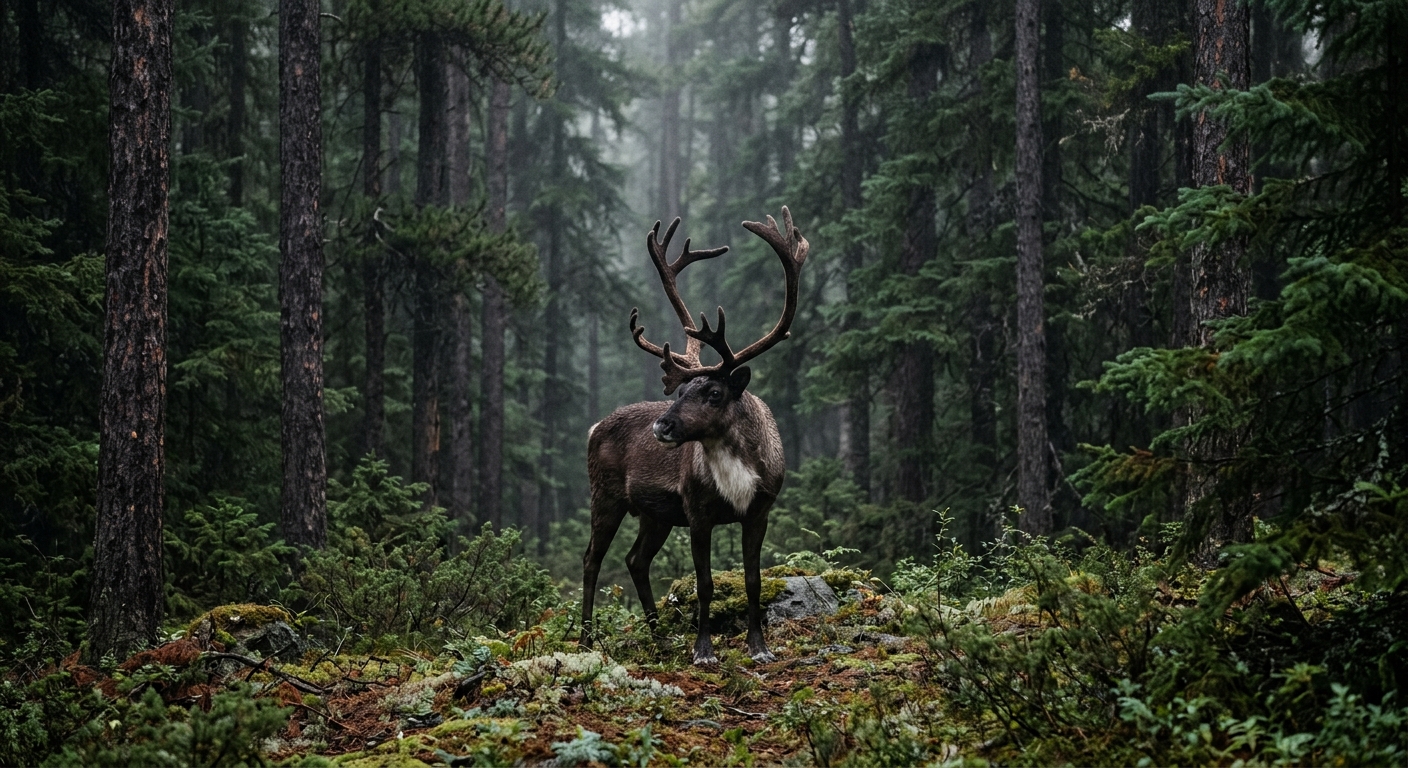
AI-generated illustration; not a photograph of the reported event.
- calendar_today October 12, 2026
Loophole in Species at Risk Act Causes Delays
Many Canadian species assessed as endangered may wait years for federal protection due to a gap in the Species at Risk Act (SARA). A new study has found that only a small fraction of at-risk species assessed since 2017 reached the Governor in Council—the federal cabinet body responsible for final listing decisions—within the recommended timelines, leaving others in a prolonged state of limbo.
Species Waiting for Government Action
Out of 288 species assessed as at risk since 2017, only 17 advanced to the Governor in Council within the intended timeframe. More than half, or 153 species, were still overdue as of January 25, 2025. Notable cases include populations of caribou, beluga whales, and lake sturgeon that remain unprotected while awaiting government decisions.
Bottleneck in the Listing Process
The identified bottleneck arises from the lack of a statutory deadline for a key stage in the species protection process. According to Peter Thompson, lead author of the study and postdoctoral researcher at Simon Fraser University, recommended timelines of one to two years are routinely missed. "The government recommended one to two years, and they are consistently failing to meet that," Thompson said.
The example of the Saskatchewan-Nelson River population of lake sturgeon highlights the problem. This population, assessed as endangered in 2017 after a 90 per cent decline since the 1960s, missed its deadline in January 2020 and was still in limbo five years later. Dams and hydro projects have further fragmented its habitat, threatening the species’ survival.
Legal and Conservation Implications
A scientific assessment by COSEWIC – the Committee on the Status of Endangered Wildlife in Canada – does not by itself mandate legal protection. An official federal listing is required to trigger prohibitions on harming the species and to begin recovery planning. These mechanisms are a core part of Canada’s federal environmental law, especially for aquatic species, for whom protections apply across Canadian waters.
Lawyer and doctoral researcher Drew Yewchuk of the University of British Columbia notes that this legal gap permits governments to delay difficult choices about conservation versus economic activities. “It could just sit there forever because there’s no timeline for the step,” Yewchuk said.
The study highlighted that delays disproportionately affect aquatic species. None of the 15 marine mammals or 49 marine fish assessed during the study reached the Governor in Council by January 2025, and long waits were also common among terrestrial mammals and freshwater fish.
The Broader Impact on Biodiversity and Culture
Andrea Reid, Canada Research Chair in Indigenous Fisheries Science and member of the Nisga’a Nation, described the impacts as extending beyond biodiversity loss. “Because these fish are so deeply connected to who we are. It’s not just food, it’s all systems of tradition and culture and language,” Reid said.
Thirty-eight Pacific salmon populations were also delayed due to ongoing information collection or analysis. Indigenous consultation featured in some cases, but Reid emphasized that such consultation should be considered a necessary component, not a source of delay. Listing can pose challenges for Indigenous communities whose cultural practices depend on continued access to these species.
Lack of Transparency and Ongoing Challenges
The study found a lack of transparency about the reasons for delays in the species protection process. Sometimes no explanation was provided, making it hard to understand why action stalled. Yewchuk argued that this allows the government to avoid making clear decisions between conservation and other interests.
Federal departments acknowledge the gap. Environment and Climate Change Canada noted there is no statutory timeline for the minister to forward recommendations to the Governor in Council. As of January 2025, 76 terrestrial species had missed recommended timelines. Fisheries and Oceans Canada added that aquatic species listings are often more complex, and since the study’s cutoff, assessments for 15 aquatic species had begun the listing process.
Concerns from Conservationists
Conservation groups warn that ongoing delays put vulnerable wildlife—including southern resident killer whales—at increased risk. While groups requested emergency measures, officials indicated that "incremental measures will be pursued" instead of immediate orders.
Conclusion
Experts and advocates call for a more efficient system to ensure timely government decision making and effective protection for Canadian wildlife. Without statutory deadlines in the Species at Risk Act, many species remain at risk despite urgent assessments of their endangered status.
Source: cbc.ca.