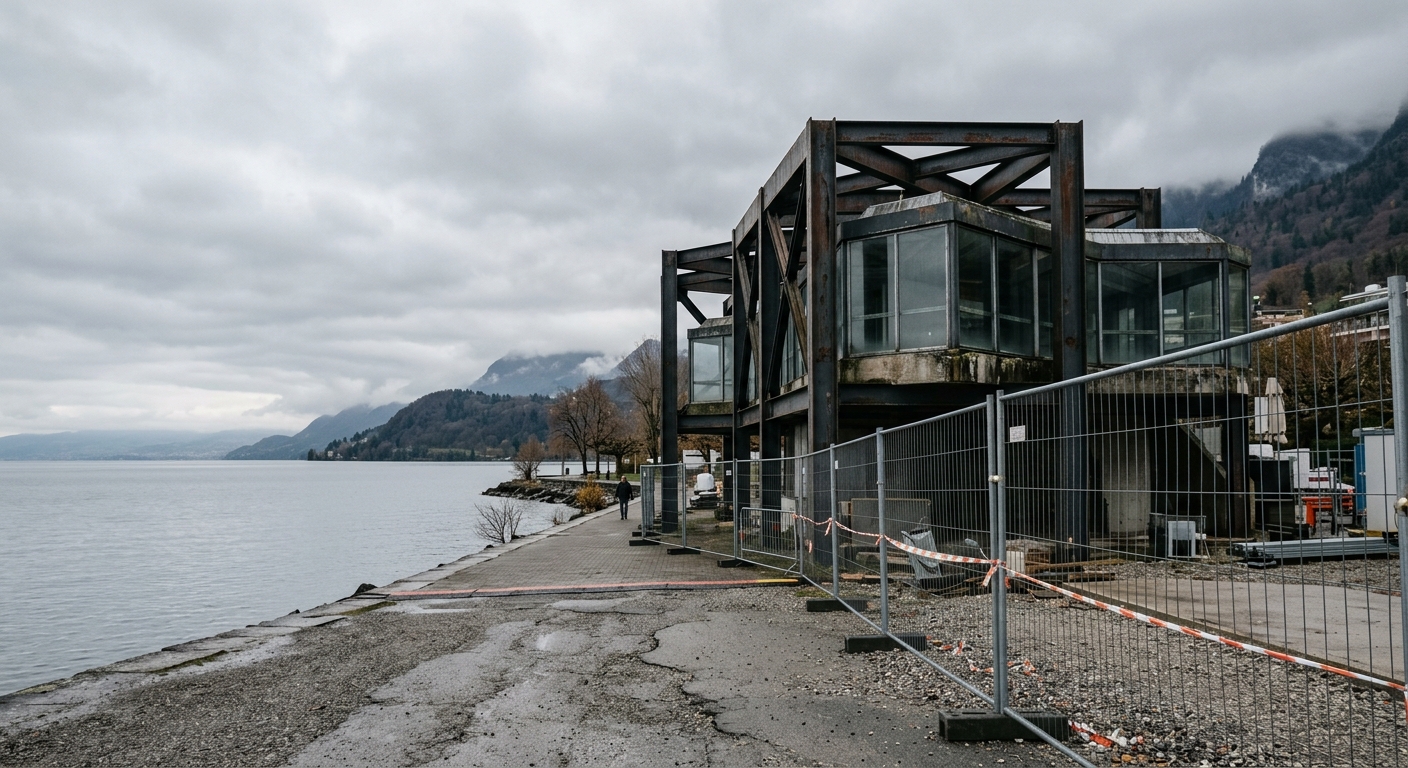
AI-generated illustration; not a photograph of the reported event.
- calendar_today October 15, 2026
Supreme Court to Deliberate on Ontario Place Redevelopment Legislation
The Supreme Court of Canada is set to hear arguments on Thursday from a coalition challenging the constitutionality of the legislation enabling major redevelopment at Ontario Place. The case, which centers around the provincial government’s Rebuilding Ontario Place Act (ROPA), could have implications beyond the Toronto landmark.
Background: Ontario Place and Planned Changes
Ontario Place, a waterfront theme park established in 1971, has been known for its iconic Cinesphere, children’s play zones, concert venues, and distinctive architecture. The provincial government has laid out plans to transform the site, which include an elaborate spa managed by a private company, the relocation of the Ontario Science Centre, revitalized play and shoreline spaces, a new parking facility, and a provincial police detachment.
Legal Challenge from Ontario Place Protectors Coalition
The coalition, Ontario Place Protectors, is contesting the Rebuilding Ontario Place Act. They argue that the act protects government actions from court scrutiny, violating constitutional law by shielding the province from judicial oversight. The coalition claims that ROPA’s exemptions from environmental and heritage laws, as well as municipal noise regulations, breach public trust.
The legal challenge was initially dismissed by an Ontario judge in 2024, and a subsequent appeal to the provincial Court of Appeal also failed. Justice Grant Huscroft, writing for the unanimous appellate court, stated that while the redevelopment plan is opposed by many, "there is no basis for the court to do so. The court is not an alternative forum for resolving political grievances." He concluded that the provisions of ROPA do not violate constitutional law.
Issues at the Heart of the Supreme Court Challenge
The Ontario Place Protectors contend that provincial superior courts have inherent authority under section 96 of the Constitution Act, 1867, to review government laws and actions and to ensure governments do not exceed their powers. Their argument holds that the scope of ROPA is unprecedented and restricts the courts' core powers by limiting judicial remedies such as injunctions and damage awards. The coalition has also sought recognition for the doctrine of public trust as an unwritten constitutional principle derived from English common law, arguing that natural and cultural resources should be safeguarded by the state for public welfare.
Margie Zeidler, daughter of Ontario Place architect Eberhard Zeidler and a member of the coalition, described Ontario Place as a valued public space, highlighting broader concerns about democratic governance. "It became more, not about Ontario Place, but about, wait a minute, what democracy are we living in here?" she said in an interview.
Provincial Government and Crown's Response
In their written submission to the Supreme Court, the Crown and the Ontario attorney general assert that the case should be dismissed. They maintain that the immunity provided by ROPA does not turn Ontario Place into a "lawless zone," but rather limits civil actions in specified contexts. The government also rejects the argument that the public trust doctrine is an unwritten constitutional principle, stating, "even if such a doctrine existed in law, which is denied, there is no evidence in the record that could warrant applying this far-reaching new doctrine to Ontario Place."
Interveners and Potential Impacts
The Supreme Court case has attracted attention and submissions from various interveners, including other provinces, First Nations, civil liberties groups, and environmental organizations. While the final decision is unlikely to be issued immediately, it will address fundamental questions about the limits of provincial power, environmental and heritage law exemptions, court jurisdiction, and the constitutional framework governing major public developments like Ontario Place.
Source: cbc.ca.