- calendar_today August 10, 2025
Canada’s Housing Chill in 2025: Why the Market Isn’t Melting
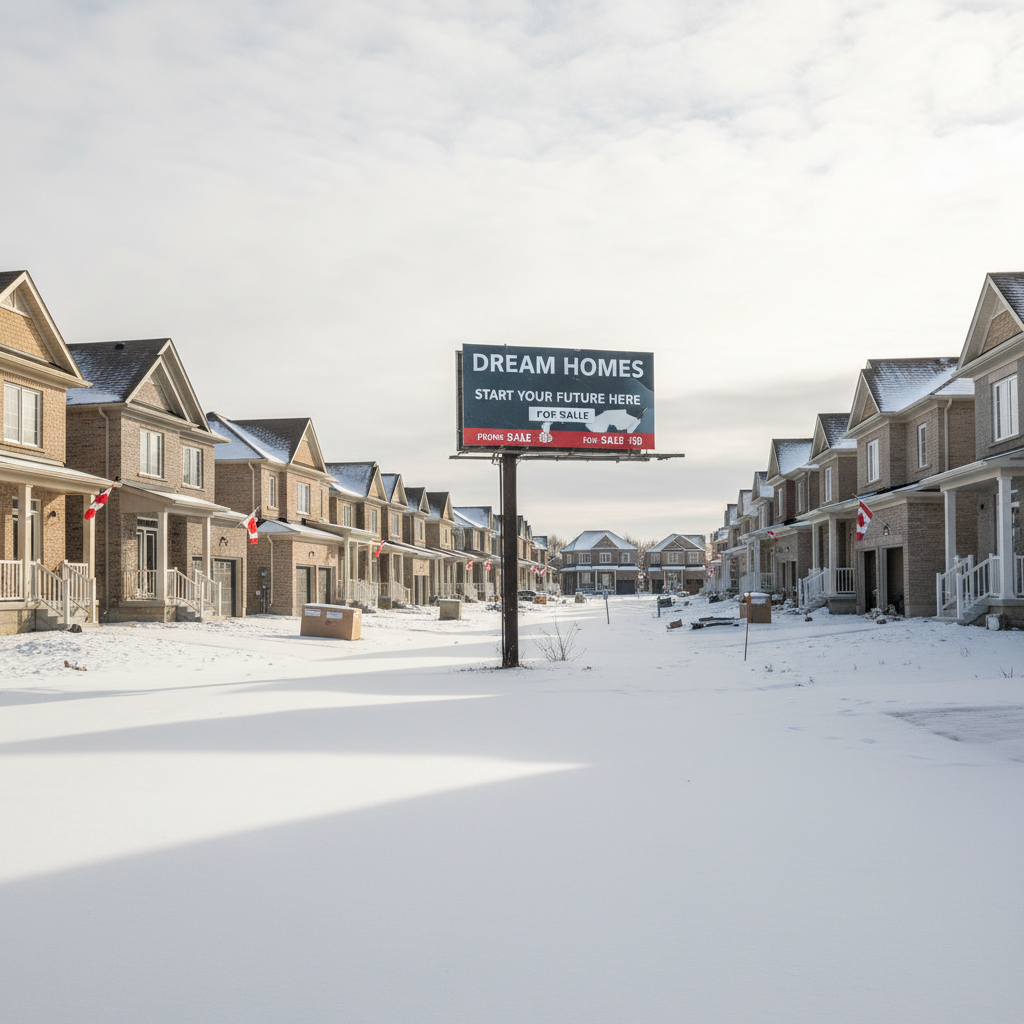
In 2025, Canada’s housing market isn’t collapsing — it’s simply stuck. While many expected prices to tumble after aggressive interest rate hikes and affordability erosion, that crash never fully materialized. Instead, the country finds itself in a real estate freeze: demand is dormant, supply is stalled, and everyone is waiting for someone else to move first.
National home sales have dropped sharply year-over-year, yet prices remain relatively flat. Government intervention has been cautious, and household debt levels are too high for much market momentum. It’s a uniquely Canadian standoff — and one that shows no signs of thawing anytime soon.
Here’s what’s really driving the housing market paralysis from British Columbia to Newfoundland.
After years of overheated growth, buyer activity has cooled across the country. According to the Canadian Real Estate Association (CREA), national home sales were down 12.4% year-over-year as of mid-2025. The sharpest declines occurred in markets that had previously led the boom — Toronto, Vancouver, and Montreal.
Even smaller cities like Moncton and Lethbridge have seen activity flatten. While immigration remains strong and housing demand theoretically exists, high borrowing costs have simply sidelined most buyers.
“Many households are choosing to wait,” says Robert Hogue, Senior Economist at RBC. “They’re uncertain about interest rates, unsure about job security, and spooked by affordability. That’s not a recipe for movement.”
Sellers Aren’t Motivated Either
The supply side of the equation is equally stagnant. Active listings in many provinces remain well below long-term averages. In part, that’s due to what analysts call the “golden handcuff” of low-interest mortgages: millions of Canadians refinanced during the pandemic and are unwilling to trade a 2% mortgage for a 6% one.
This phenomenon has hit older homeowners especially hard. Downsizing doesn’t make financial sense when your current payment is half what you’d pay on a smaller home. Many are choosing to age in place instead.
“There’s no incentive to sell,” says Tania Bourassa-Ochoa, housing expert at CMHC. “So they’re not. And that’s compounding the freeze.”
Housing Starts Are Slowing—At the Worst Time
Despite widespread calls to build more housing, the new construction sector is slowing down. According to CMHC, housing starts in Canada fell 15% in the first five months of 2025 compared to the same period in 2024.
Developers face higher financing costs, regulatory hurdles, and soft presale activity. Projects in places like Calgary and Ottawa are being delayed or canceled altogether. The result is fewer units entering the pipeline at a time when demand—though muted—is still structurally high due to immigration.
“Supply creation is not keeping up with population growth,” warns Kevin Lee, CEO of the Canadian Home Builders’ Association. “That’s going to have long-term affordability consequences.”
Regional Realities: One Freeze, Many Forms
While the national freeze is real, it manifests differently across Canada:
- British Columbia is grappling with high prices and stagnating sales in Greater Vancouver, but suburban and interior regions are seeing limited activity due to affordability gaps.
- Prairie provinces like Alberta and Saskatchewan have more stable prices and better affordability, but even these markets are seeing hesitant buyers due to job market uncertainty and migration patterns.
- Ontario faces a profound mismatch: Toronto’s resale market is stuck, while new condos face construction delays and lukewarm investor interest.
- Atlantic Canada, which saw a pandemic-era boom, is now seeing normalization—sales down, listings stagnant, and affordability squeezed by wage gaps.
This regional divergence adds complexity for national policymakers, making it harder to implement one-size-fits-all solutions.
The Rental Market Adds Pressure
As the ownership market remains locked, Canada’s rental sector is absorbing the overflow — and straining under it. Rents have surged in urban areas, with double-digit increases reported in cities like Halifax, Vancouver, and Toronto.
But the rental market is also experiencing its own version of stagnation: landlords are holding properties longer, turnover is low, and new purpose-built rental construction is lagging due to cost and financing challenges.
“This freeze in ownership isn’t solving affordability,” says Paul Kershaw, founder of Generation Squeeze. “It’s just shifting the pressure to renters — and they’re getting squeezed harder than ever.”
Policy Responses: Cautious and Piecemeal
So far, federal and provincial governments have responded to the housing freeze with cautious steps. While some first-time buyer programs have been expanded, and development incentives introduced, critics argue that policy has not kept pace with the scale of the crisis.
The Trudeau government’s 2025 Housing Affordability Framework includes promises of accelerated approvals, transit-oriented development, and funding for co-op housing. However, execution has been slow and regional cooperation uneven.
“We’ve known for years what needs to be done,” says Mike Moffatt, senior director at Smart Prosperity Institute. “But political will hasn’t matched the urgency of the problem.”
What Could Trigger a Thaw?
Experts say several factors could eventually unlock Canada’s housing freeze:
- Bank of Canada rate cuts: A sustained drop in rates to below 5% could revive both sides of the market.
- Zoning reform: Municipalities adopting four-plex and six-plex policies could stimulate medium-density growth.
- Rental expansion: Increased federal funding for rental housing could alleviate pressure on homebuying.
- Demographic shifts: As more baby boomers reach retirement age, downsizing may accelerate listings.
But none of these changes are guaranteed — and even if they happen, they may take years to fully materialize.
2025: A Year of Waiting
In the end, the defining feature of Canada’s 2025 housing market is hesitation. Buyers are waiting for affordability to return. Sellers are waiting for better pricing. Builders are waiting for capital. And policymakers are waiting for consensus.
The market isn’t crashing. But it isn’t moving, either. And in a country facing rapid population growth, that kind of stasis may be just as dangerous.
“Frozen doesn’t mean safe,” warns Petramala. “If we don’t break the deadlock, we’re going to face a much deeper structural crisis down the road.”