- calendar_today August 20, 2025
.
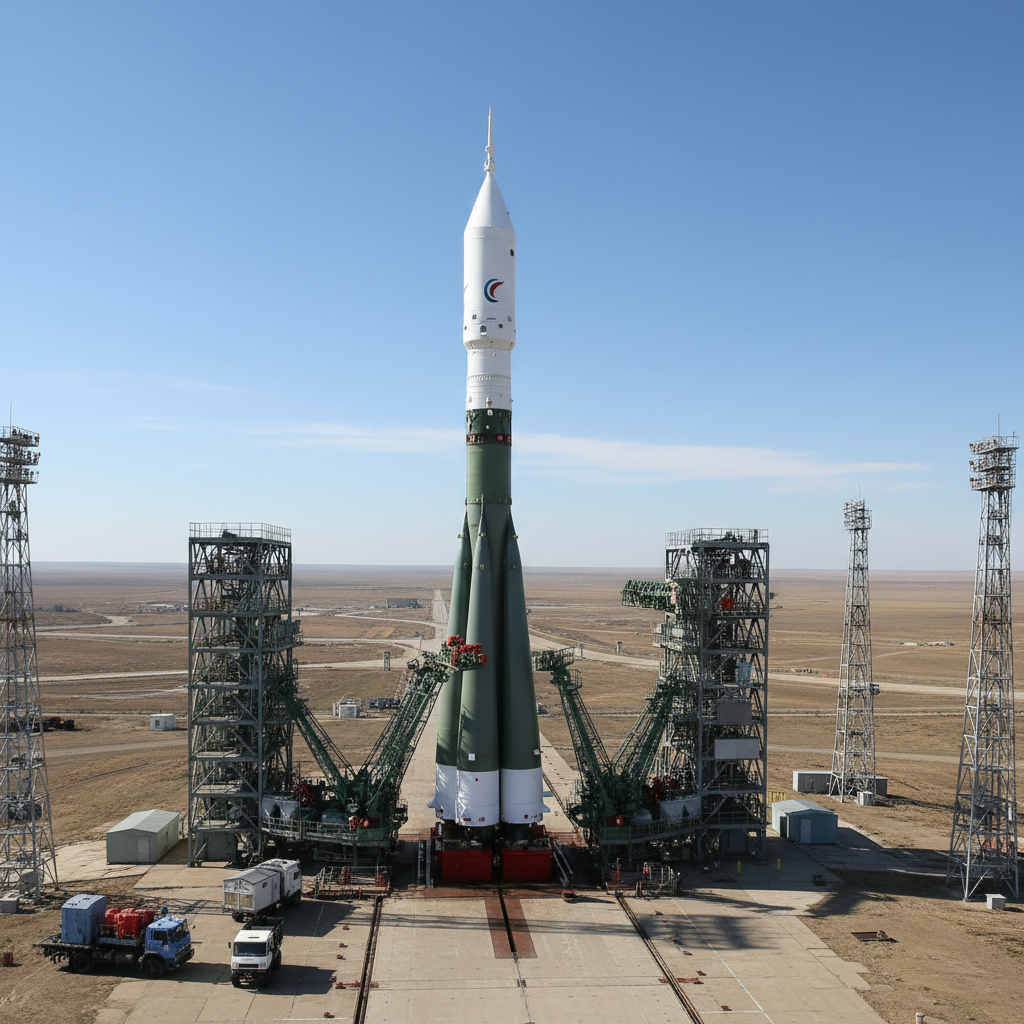
Russia’s Next Rocket to Launch by End of Year Russia is set to launch its latest rocket, Soyuz-5, before the end of this year, Roscosmos head Dmitry Bakanov said in an interview with the state-run news agency TASS. “Yes, we are preparing for December,” Bakanov said. “We are in the last days and hours before the launch of Soyuz-5.” The rocket will take off from the Baikonur cosmodrome in Kazakhstan, and the liftoff is expected to be the first test flight of a launcher that has been in development for over a decade. Roscosmos plans several test launches of Soyuz-5, but it is not expected to enter regular service before 2028.
The Soyuz-5, also known as Irtysh, is not a rocket that is based on a clean sheet of paper. On the contrary, it is very similar to the Zenit-2 launcher, a rocket designed in the 1980s by the Yuzhnoye Design Bureau in Ukraine. Zenit rockets were assembled in Ukraine, but they have relied on Russia’s RD-171 engine, making them an example of post-Soviet aerospace collaboration until Russia invaded Ukraine in 2022. In late 2023, Russia bombed the Ukrainian factory that once built Zenit rockets.
Soyuz-5 is in many ways a bigger, Russian-made version of the Zenit. Roscosmos’ redesign simply bypasses Ukraine, allowing all core components to be built in Russia. From Moscow’s perspective, that is a win in two ways: First, it ends a decade of dependency. Second, the move paves the way for the retirement of the Proton-M launcher, an outdated rocket whose production was restarted last year after nearly a decade of inactivity.
A Bridge to the Past
Technically, Soyuz-5 is a medium-lift rocket. The vehicle can lift 17 metric tons to low-Earth orbit, thanks to slightly bigger propellant tanks than what Zenit has. At its heart, Soyuz-5 has the RD-171MV engine, the latest generation of an engine that has been in development for decades.
This engine is the descendent of a family of designs that can be traced back to the Energia rocket program of the 1980s. Energia was developed to power the Soviet Union’s answer to NASA’s space shuttle, Buran. The most significant difference of RD-171MV from earlier generations is the fact that the engine contains no Ukrainian components. This kerosene and liquid oxygen engine generates over three times more thrust than NASA’s Space Shuttle main engine, and as such it is the most powerful liquid-fueled rocket engine in operation.
For all that, Soyuz-5 itself is an expendable rocket. Newer competitors, most notably SpaceX’s Falcon 9, have been designed with reusability in mind from the start. It remains to be seen if Soyuz-5 will ever be able to win a significant share of the international launch market under these circumstances.
For Roscosmos, however, the rocket still serves a critical purpose. With its budget constrained by the high cost of war and international sanctions, it has been challenging to build a brand-new reusable rocket from scratch. The Amur rocket, also called Soyuz-7, has been designed to fill this role. With its reusable first stage and methane-fueled engine, Amur is intended to compete with SpaceX in terms of price at some point in the future. But Amur has been delayed several times, and its maiden launch is now scheduled for no earlier than 2030.
In that context, Soyuz-5 can be seen as a stopgap. It will keep the Russian space program on the path to development, even if the way it does so is anchored in the Soviet past.
The Commercial Hurdles
For Russia, it is also far from clear what role Soyuz-5 can play in the global launch market. The industry has changed profoundly in the last decade, and new entrants like SpaceX or providers from China have presented customers with cheaper and more flexible alternatives. Russia still flies its Soyuz-2 rockets for crewed launches and the Angara family for heavier payloads, but neither have carved out a strong niche in international markets. Whether Soyuz-5 can buck this trend remains to be seen.
Still, the fact that Roscosmos has developed Soyuz-5 to the point of a near-launch with its existing funding base is something to be celebrated. A successful test launch in December would show that, sanctions or not, and with a limited budget or not, Russia can still put new hardware on the launch pad.
Soyuz-5 might not be a rocket that changes the rules of the game. But for Russia, it matters for other reasons. The vehicle is a symbol of technological independence from other countries, and it is a bridge to the future. What that future will look like is less clear, whether it will arrive with the Amur rocket or with another as-yet-unnamed generation of rockets.