- calendar_today September 2, 2025
Apple might have just discovered the Trump trade war’s magic workaround: go directly to his ego. On Wednesday, Trump said Apple will be spared from a looming 100 percent tariff on semiconductors that would have made iPhones more expensive in nearly every country where they are sold. Reuters reported the exemption was given on the same day that Apple committed to a further $100 billion in U.S. spending and offered Trump a bespoke, monogrammed statue.
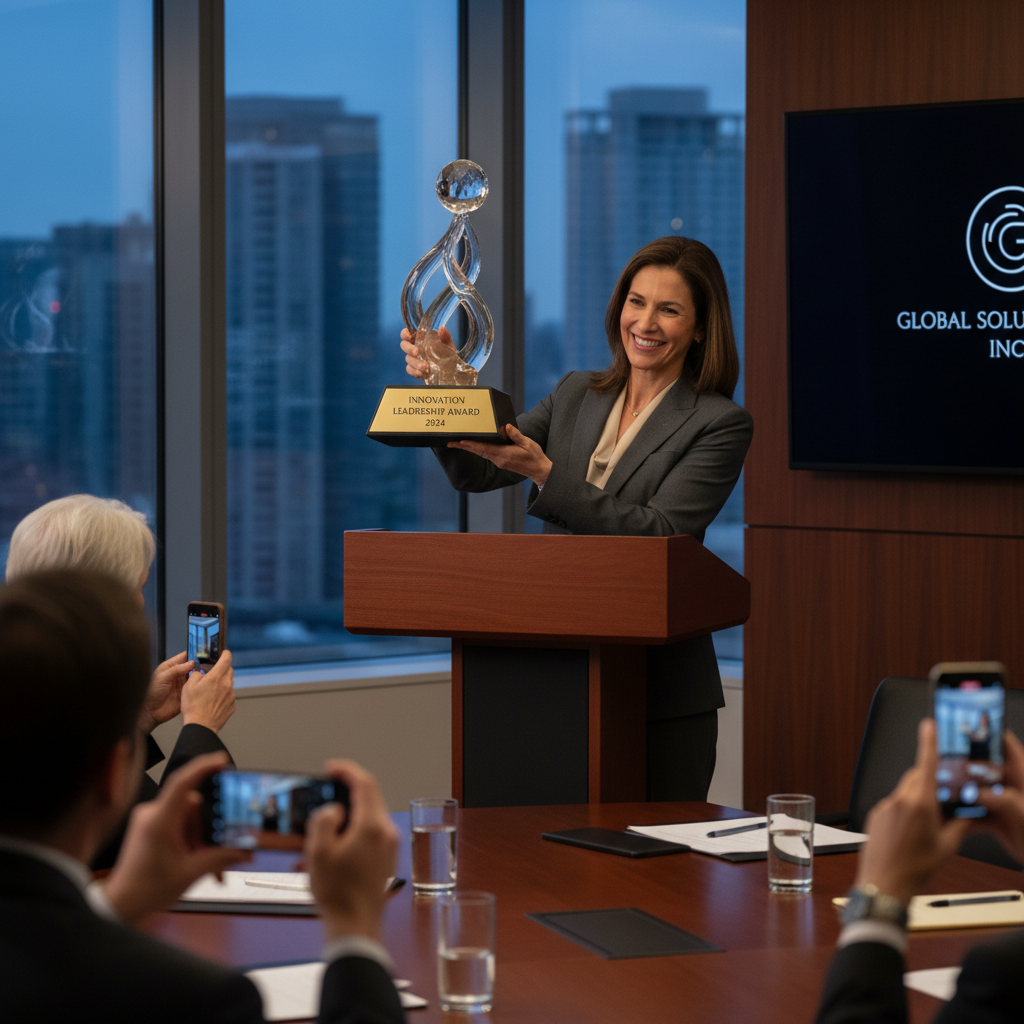
Apple CEO Tim Cook explained the statue was made by Apple supplier Corning, which produces specialty glass for the iPhone. A former corporal in the U.S. Marine Corps, now working at Apple, designed it, which was then cut into a large circle of thick glass with an imposing Apple logo in the center. Cook said it came from Utah, with a 24-karat gold base on which was engraved Trump’s name. Cook added the finishing touch, signing it with a “Made in America” message.
Trump, who has long berated companies to make more of their products in the U.S., seemed to eat up the gift. When it was presented to him in the Oval Office on Wednesday, Trump said Apple—and any other company that builds plants in the U.S.—will pay “no charge” when the tariff on semiconductors is eventually enacted. The development is a major victory for Apple, which has been in Trump’s crosshairs over the location of its supply chain for months.
Apple’s reprieve from the trade war comes after a turbulent spring. Over the past several months, Trump has been publicly haranguing Apple over the fact that it is moving parts of iPhone production to India, rather than bringing it back to the U.S. In April, he tweeted that his trade war would result in “MADE IN AMERICA IPHONES.” In May, it was even less subtle. On his way through the Middle East, Trump said he had a “little problem with Tim Cook” and “would like Apple to start building their plants in the U.S.” There were reports that Trump told Cook directly: “We are treating you really good, we put up with all the plants you built in China for years. We are not interested in you building in India.”
The idea that Apple could move iPhone assembly into the U.S. was always going to be a difficult one. Experts have explained that it would take years, if it were possible at all. But Trump’s Commerce Secretary Howard Lutnick has maintained Apple was looking into “robotic arms that do the job that the Chinese do.”
Cook has his own charm offensive, which appeared to pay off on Wednesday. Trump might still be insistent that iPhones be “made in America,” but he has apparently backed off from demanding they start immediately. “We have started the process and that will be a significant step toward the ultimate goal of ensuring that iPhones sold in America also are made in America,” Trump said on Wednesday, offering tacit approval for Apple’s approach.
Cook said some components for the iPhone, like semiconductors, glass, and Face ID modules, are already produced domestically, but there was no timeline as to when final assembly will come to the U.S., if ever. “It will be a while for final assembly,” he said, though that final step is currently set to remain abroad.
Apple’s balancing act is nothing new. During Trump’s first term, Cook managed to court the president with promises to invest in U.S. manufacturing while blunting his more extreme demands. Trump, in 2017, boasted Apple would construct three “big, beautiful” factories. Two years later, only one had been built, and that was a plant making face masks rather than consumer devices. Last year, Trump visited a plant in Texas that was announced as a potential iPhone factory. Apple then booked the plant for the manufacture of MacBook Pros.
Now Apple is promising to spend $600 billion in the U.S. over four years. While that number sounds large, analysts have told Reuters that it is “business as usual” for Apple and matches its spending both under Biden and Trump’s previous term. In short, it is unclear if the new pledge is something over and above what Apple would have done.
The tariff-happy Trump has suggested that companies that don’t live up to such promises will retroactively pay a 100 percent tariff. But for the time being at least, Apple can keep going in the way it always has—by continuing its usual investment plans but leaving the iPhone assembled overseas. The tariff calculus hasn’t changed, and Trump isn’t acting on it—at least for now.
Apple’s investment pledge is a “savvy solution to the president’s demand that Apple manufacture all iPhones in the U.S.,” Nancy Tengler, the CEO and chief investment officer of Laffer Tengler Investments, a fund that holds Apple shares, told Reuters.
Cook’s mix of charm and emollient lobbying, symbolic gifts, and measured promises to invest just enough domestically has, once again, bought Apple time in the trade war. Trump will continue to trumpet “Made in America” progress, but Apple can be expected to keep its most labor-intensive production overseas for the foreseeable future, and in the process avoid the cost of tariffs.