- calendar_today August 24, 2025
From Lucifer’s Wings to Daniel’s Reign: The Sandman’s Journey
The much-awaited second season of Neil Gaiman’s The Sandman arrives on Netflix on January 24. It’s a different kind of finale for fans of the original graphic novels and those who tuned in to season 1 of the show.
Like its predecessor, the second season of The Sandman (2023) masterfully evokes the wistful and surreal atmosphere of Gaiman’s groundbreaking comics. The episodes plow through the source material at a brisk clip, balancing the anthology structure of the original comics with a linear structure focused on the development of Dream, aka Morpheus.
In January, Netflix announced that the second season would be the last for the popular series, although many believed it was due to the several allegations of sexual misconduct against Gaiman himself, which he has denied. On X, showrunner Allan Heinberg confirmed that the show was always intended to be limited to two seasons. According to Heinberg, the creative team felt they had enough to work with for two seasons and no more, which feels right.
Season 1 covered Preludes and Nocturnes and The Doll’s House, along with two bonus episodes, one of “Dream of a Thousand Cats” and one of “Calliope” from Dream Country. Season 2 mostly adapts Seasons of Mists, Brief Lives, The Kindly Ones, and The Wake, including two key storylines from Fables and Reflections, “The Song of Orpheus” and a part of “Thermidor”, along with the award-winning short story “A Midsummer Night’s Dream” from Dream Country. The special episode adapts the 1993 one-shot spinoff, Death: The High Cost of Living. The season skips events from A Game of You and a few short stories, which is fitting, as they don’t impact the overall Dream King arc.
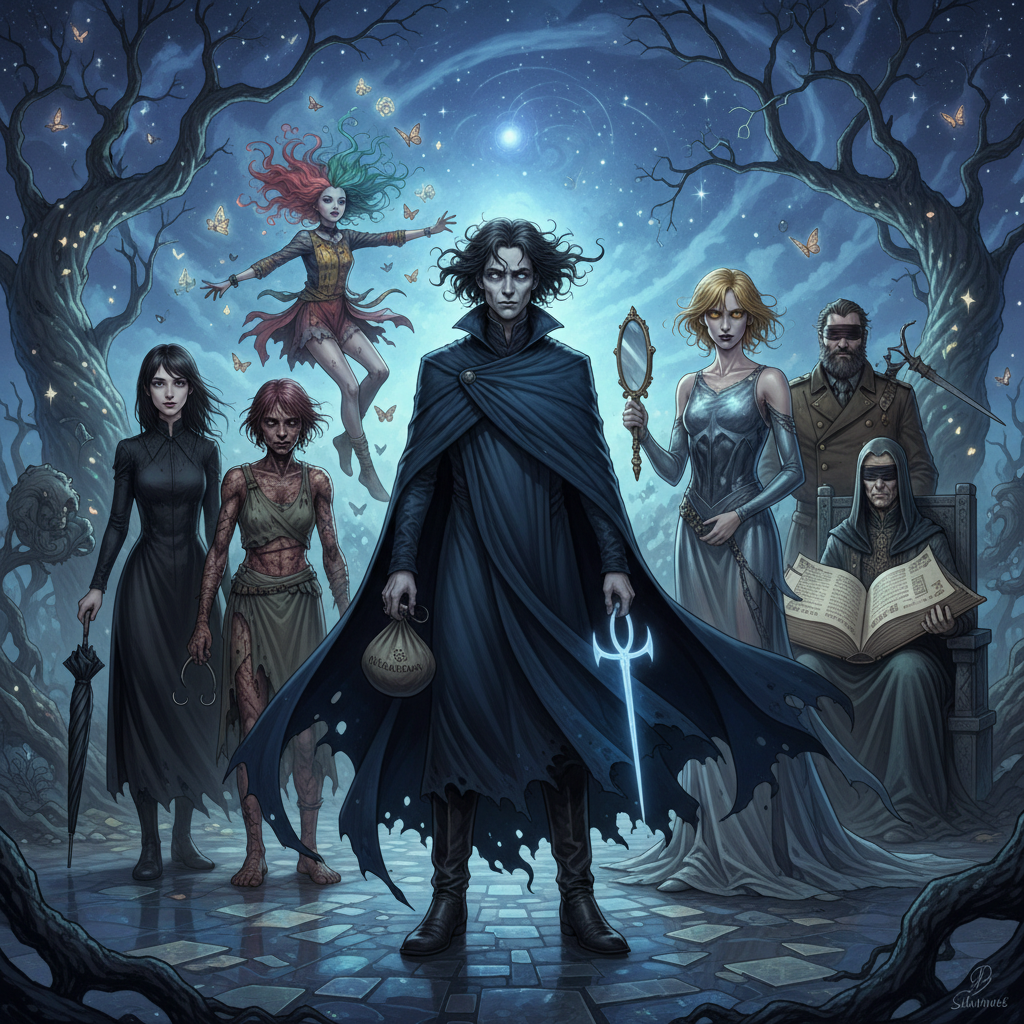
Season 2 of The Sandman picks up after Morpheus (Tom Sturridge) has won all his battles at the end of Season 1. He escaped his 70-year imprisonment, recovered his stolen talismans, avenged his rogue brother Corinthian (Boyd Holbrook), and put an end to the Vortex menace. Dream rebuilds his dominion, the Dreaming, with Destiny (Adrian Lester), Death (Kirby Howell-Baptiste), Desire (Mason Alexander Park), Despair (Donna Preston), and Delirium (Esmé Creed-Miles), with each of the Dream King’s siblings contributing what they can, when they can, to the Dreaming’s construction. Morpheus’ task is interrupted by a rare visit by his sister Destiny, who calls together Death, Desire, Despair, and Delirium for a tense family summit.
The summit sends Morpheus on a journey to rescue Nada (Umulisa Gahiga), the queen of the First People and his old lover, from the Hell he once sentenced her to. It also pits him against Lucifer (Gwendolyn Christie) for the second time this season, after she has a change of heart and seeks a chance at redemption. Lucifer, however, has yet to forgive the Dream King for her Season 1 defeat, and a second confrontation is inevitable. But this time, she’s not out for a fight. In a shocking turn, Lucifer abdicates her rule of Hell and hands Morpheus the key to her empty kingdom, telling him to pick someone new, from the many worthy contenders he can find, like Odin, Order, Chaos, or the fallen demon Azazel.
Delirium is having the worst time of all, pining for her missing brother, Destruction (Barry Sloane), who abandoned his realm thousands of years ago. Her unhappiness sets Morpheus on a course for his destiny, the blood of his family on his hands, and he is targeted by the Kindly Ones.
High Notes, Lowlights, and a Dignified Curtain Call
It’s still an expensive-looking TV, with great casting and effects that evoke Gaiman’s original artwork with a richness and clarity rarely seen on TV. Season 2 even features some of the best CGI bugs you’ll see all year. The complaints about slow pacing from some viewers can only be attributed to the deliberate pacing and lingering scenes necessary to do Gaiman’s sprawling epic story justice.
The series’ weakest moment comes in the episode “Time and Night”, where Morpheus consults his parents, Time (Rufus Sewell) and Night (Tanya Moodie). While these scenes are technically canon (Time and Night are indeed the parents of the Endless), they come across as uncomfortably amateurish, with stilted and uninteresting dialogue that even Sewell’s immense talent cannot elevate past occasionally feeling like a couple at couples’ therapy.
Season 2 has many memorable high points, too: Lucifer asking Dream to cut off her wings; the goddess Ishtar (Amber Rose Revah) sloughing off her pretenses and shame and dancing uninhibited in her true, divine form for one last night; Dream explaining to William Shakespeare why he must write The Tempest; a reformed Corinthian developing genuine feelings for Johanna Constantine (Jenna Coleman). Dream also drowns his son; the demon Orpheus sings a lament for his lost love in the Underworld, and Abel, his immortal companion, and the Furies take their revenge on Fiddler’s Green (Stephen Fry), Mervyn Pumpkinhead (Mark Hamill), and Abel (Asim Chaudhry).
Morpheus’ time finally runs out when he takes Death’s hand for the last time, at which point a new version of her appears to him, her new human vessel Daniel Hall (Jacob Anderson), a child born of the Dreaming in the waking world, the only one of Dream’s six children to be human. Confused but unstoppable, Daniel steps into the shoes of his predecessor. His Endless siblings all mourn the Dream King and take the new Dream under their wing.