- calendar_today August 13, 2025
Canada’s commercial property sector enters 2025 with cautious optimism. After a volatile period marked by interest rate hikes and remote work disruptions, many of the country’s core real estate markets are beginning to stabilize. Demand for industrial, retail, and multifamily spaces is improving, while office assets face structural headwinds. What’s clear is that the rules of the game are changing—and investors are recalibrating.
In 2025, the focus has shifted from aggressive expansion to smart repositioning, green retrofits, and diversified use cases. National real estate firms are prioritizing resilience, energy performance, and tenant experience in a market where long-term value is increasingly tied to adaptability.
Macroeconomic Shifts Fueling Confidence
The Bank of Canada has kept its policy rate steady through mid-2025, following two years of measured tightening aimed at controlling inflation. This relative stability, combined with strong immigration targets and moderating inflation (now hovering near 2.1%), is encouraging deal activity in the commercial real estate space.
Canada’s GDP growth is expected to reach 1.8% this year, modest but consistent. Public infrastructure investments—particularly in transit, housing, and green energy—are reinforcing urban real estate fundamentals across several provinces.
Industrial Space: The Demand Keeps Rolling
Among the strongest performers is the industrial segment, particularly warehousing and logistics facilities. The growth in domestic manufacturing, e-commerce distribution, and food logistics continues to put pressure on vacancy rates in gateway markets like Toronto, Montreal, Calgary, and Vancouver.
Developers are also pursuing speculative builds near ports and major transportation corridors. Despite higher construction costs, demand for well-located facilities with modern amenities remains high. ESG-focused upgrades—like solar panels and battery storage—are becoming standard to attract corporate tenants with net-zero mandates.
Retail’s Reinvention Moves Forward
Canada’s retail landscape has defied worst-case expectations. In 2025, physical retail is far from obsolete. Instead, it’s evolving. Successful formats include open-air centers, health and wellness hubs, and lifestyle destinations integrated with residential and office uses.
Retail leasing activity has rebounded in urban nodes and regional hubs alike. Provinces such as British Columbia and Quebec are witnessing robust leasing for grocery-anchored strips, boutique fitness studios, and service-based tenants. Big-box vacancies remain a concern in suburban malls, but many are being repositioned or demolished for mixed-use redevelopment.
The Office Market Faces a Fork in the Road
The office segment in Canada remains fragmented. Downtown towers in major cities are seeing modest leasing improvements, but large swaths of older inventory—particularly in secondary urban markets—continue to struggle with high vacancies and deferred upgrades.
Hybrid work arrangements have become entrenched, forcing landlords to redesign buildings around flexibility, air quality, wellness certifications, and shared spaces. According to Colliers, Class A towers with green certifications are maintaining occupancy rates above 80%, compared to under 60% for non-upgraded Class B/C assets.
A growing number of landlords are exploring adaptive reuse strategies to convert vacant office stock into rental housing or institutional spaces—though progress varies widely by city and zoning regime.
Green Building Mandates Are Driving Investment Strategy
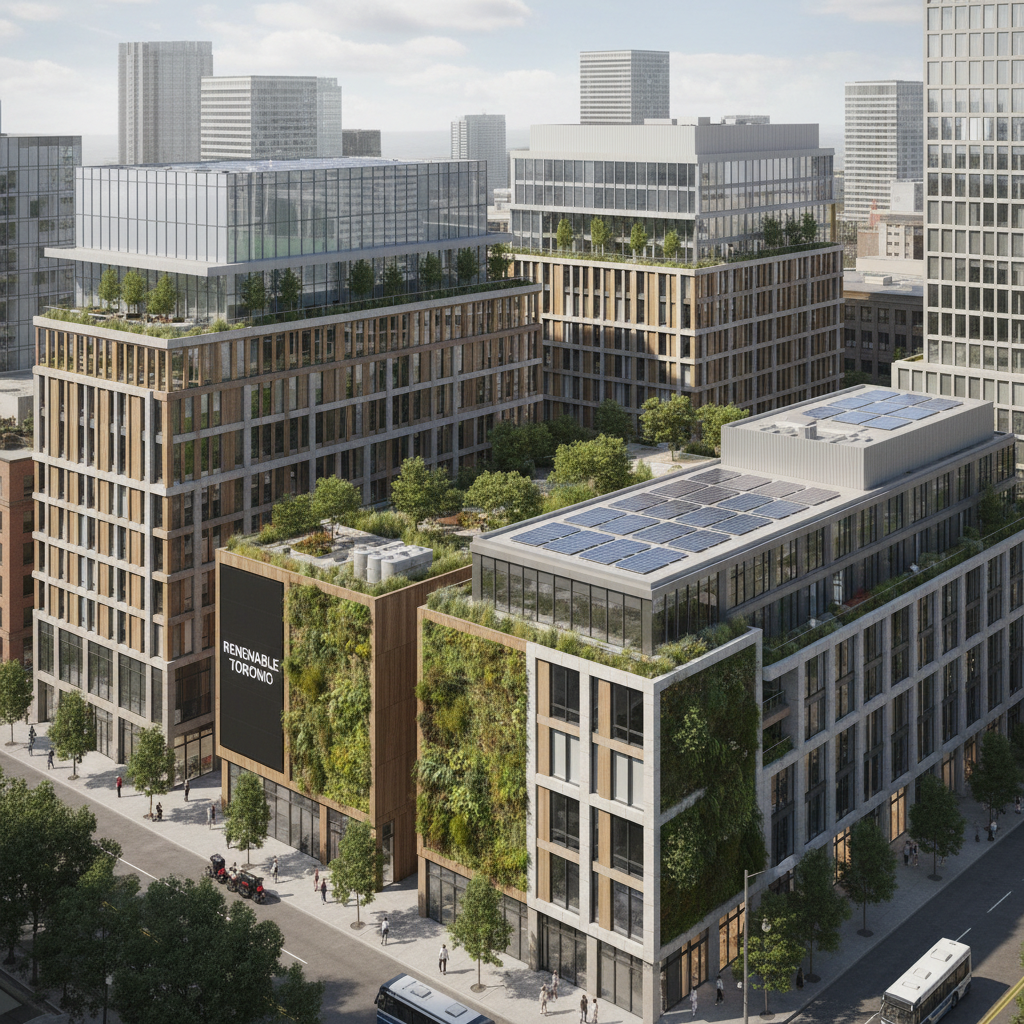
Sustainability is no longer just a buzzword. In 2025, it is central to how commercial real estate is evaluated. Developers, pension funds, and asset managers are pursuing LEED Gold, WELL, and BOMA BEST certifications to meet tenant demand and qualify for financing.
Federal and provincial regulations—including carbon reporting requirements, net-zero construction codes, and incentives for retrofits—are driving widespread decarbonization efforts. Provinces like Ontario and Quebec are leading the charge, supported by municipal programs in cities like Vancouver, Toronto, and Edmonton.
The Canadian Infrastructure Bank’s continued support for climate-resilient projects is also shaping new development patterns, especially in coastal and high-density areas.
Capital Markets Show Signs of Cautious Activity
CRE investment volumes are trending upward in 2025, though buyers remain highly selective. With interest rates leveling off and inflation under control, investors are returning to the market—but they’re targeting assets with stable income, strong ESG credentials, and urban infill locations.
Data from Avison Young shows that total CRE transaction volume could surpass CAD 52 billion by year-end, up from CAD 44 billion in 2024. Multifamily, industrial, and life sciences real estate are attracting the most capital, while suburban office properties remain under pressure.
International investment interest is also recovering, particularly from U.S., German, and Singaporean funds seeking portfolio diversification in Canada’s comparatively stable markets.
Spotlight on Regional Momentum
Here are a few green indicators of Toronto Metro:
- Toronto & GTA: Urban industrial and high-rise mixed-use projects dominate, with rental housing and grocery retail seeing strong tenant demand.
- Vancouver: Land scarcity is pushing vertical development and creative space use. Strata industrial and small-bay warehousing are hot commodities.
- Montreal: Institutional interest is growing in R&D campuses, life sciences, and mid-rise rental housing. ESG-compliant assets are in high demand.
- Calgary & Edmonton: Diversification into health care, tech, and warehouse facilities continues. Downtown office conversions are gathering pace.
- Atlantic Provinces: Halifax and St. John’s are seeing steady growth in logistics, tourism-related retail, and government-backed development.
Key Risks on the Horizon
Although fundamentals are improving, risks remain. Construction costs are still elevated, especially for ESG-compliant retrofits. Labor shortages in skilled trades, regional housing imbalances, and municipal permitting backlogs could slow project timelines.
In the office market, landlords without reinvestment capital may struggle to maintain occupancy. Meanwhile, environmental risks—such as flood exposure and wildfires—are impacting underwriting and insurance costs, especially in B.C. and Alberta.
The Path Ahead: Quality, Resilience, and Purpose-Driven Assets
Canada’s commercial real estate market in 2025 is no longer about fast growth. It’s about building quality, resilient, and community-oriented properties that support evolving work, shopping, and living patterns.
For investors and developers, long-term success will depend on portfolio diversification, location strategy, and a willingness to embrace technological and environmental transformation. While volatility hasn’t disappeared, Canada’s CRE market is proving it can evolve—with discipline, creativity, and a sharp eye on sustainability.