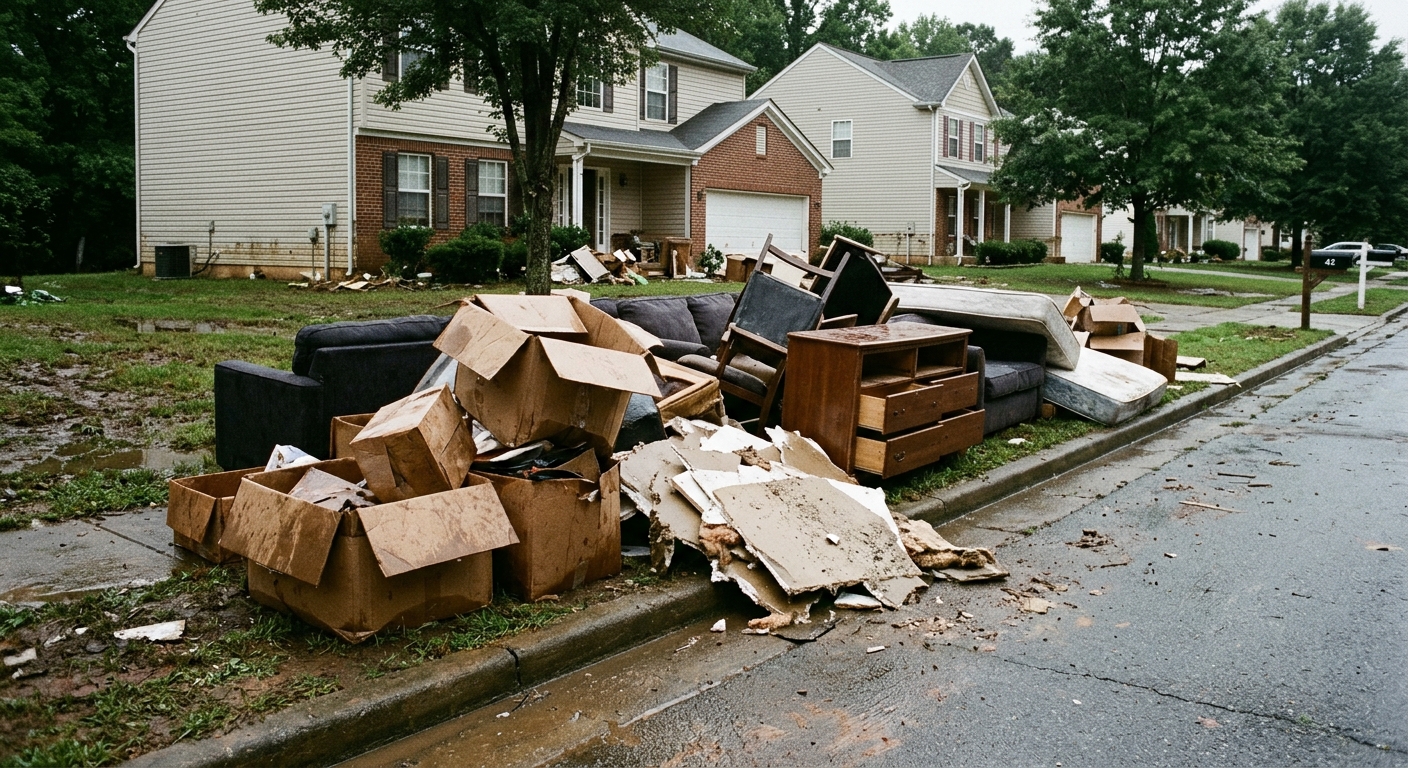
AI-generated illustration; not a photograph of the reported event.
- calendar_today November 2, 2026
Summer Floods Cause Massive Damage Across Niagara
The summer of 2026 brought severe flooding to northern Niagara, pushing Canada's insured natural disaster losses to some of the highest levels ever recorded. Back-to-back storms on July 27, July 28, and again on August 2, each delivered a month's worth of rain in a matter of hours, overwhelming sanitary sewer systems in St. Catharines, Lincoln, and sections of Niagara-on-the-Lake and Niagara Falls. Thousands of homes were inundated, many with sewage-contaminated water.
Flooding Victims Express Overwhelming Anxiety and Despair
A recent survey of nearly 450 homeowners, organized by the Northend Neighbours online group, indicates the emotional toll of these floods. Over 60 percent of flooded residents reported remaining in limbo with their insurance claims three months after the storm. Respondents described feelings of stress, despair, and trauma, with some even expressing suicidal thoughts. Daya Lye, an organizer of the survey, said, "That part was shocking to me how bad it was for people emotionally. It's definitely a mess." Of those surveyed, about 97 percent reported being flooded, with 70 percent characterizing the damage as severe or catastrophic.
Disaster Recovery Program Not Activated for Niagara
St. Catharines MPP Jennie Stevens addressed the Ontario legislature, demanding activation of the Disaster Recovery Assistance for Ontarians (DRAO) program for Niagara flood victims. The DRAO, offering up to $250,000 for emergency expenses and repairs after natural disasters, typically excludes sewer backup incidents except under special circumstances for low-income households. The City of St. Catharines and a Environment and Climate Change Canada meteorologist confirmed the floods resulted from storms, but Ontario Municipal Affairs and Housing Minister Rob Flack maintained, "Bottom line is, DRAO was not activated because it was not overland water. It was sewer backups." Stevens argued the government has an obligation to help Ontarians during disasters, noting, "Ninety two days later, still, no relief in north Niagara."
Insurance Claims Bring Mixed Results for Homeowners
Many Niagara residents are still negotiating with insurance companies over their claims. According to Lye, while some insurance providers responded quickly, others have left homeowners waiting. Only 36.6 percent of survey respondents reported full approval of their claims. Stevens highlighted that "seniors and vulnerable families are drowning in repair bills and fears of losing their homes." The uncertainty and delays have exacerbated the crisis for many who lack clarity or closure on their recovery process.
Rising Costs and Calls for Climate Resilience
The Insurance Bureau of Canada reported Niagara's flooding resulted in $360 million in insured losses, contributing to a total of $3.7 billion in insured damages across Canada over the summer—a figure ranking as the third costliest on record for severe weather. Annual insured losses from extreme weather have averaged more than $3.7 billion in the past decade, up from $1.4 billion per year in the preceding decade. The bureau urges governments to use land use planning to limit development in flood-prone areas, incentivize homeowners to protect against extreme weather, and invest in resilient infrastructure to reduce future risk.
Policy and Emotional Impacts Remain Unresolved
As insurance claims drag on and provincial aid remains out of reach, Niagara flood victims continue to face mounting costs and emotional hardship. With affected neighborhoods still recovering and calls for government action ongoing, the summer floods have highlighted gaps in disaster recovery policies and the urgent need for measures to address both the financial and psychological impacts on flood victims.
Source: cbc.ca.