- calendar_today September 4, 2026
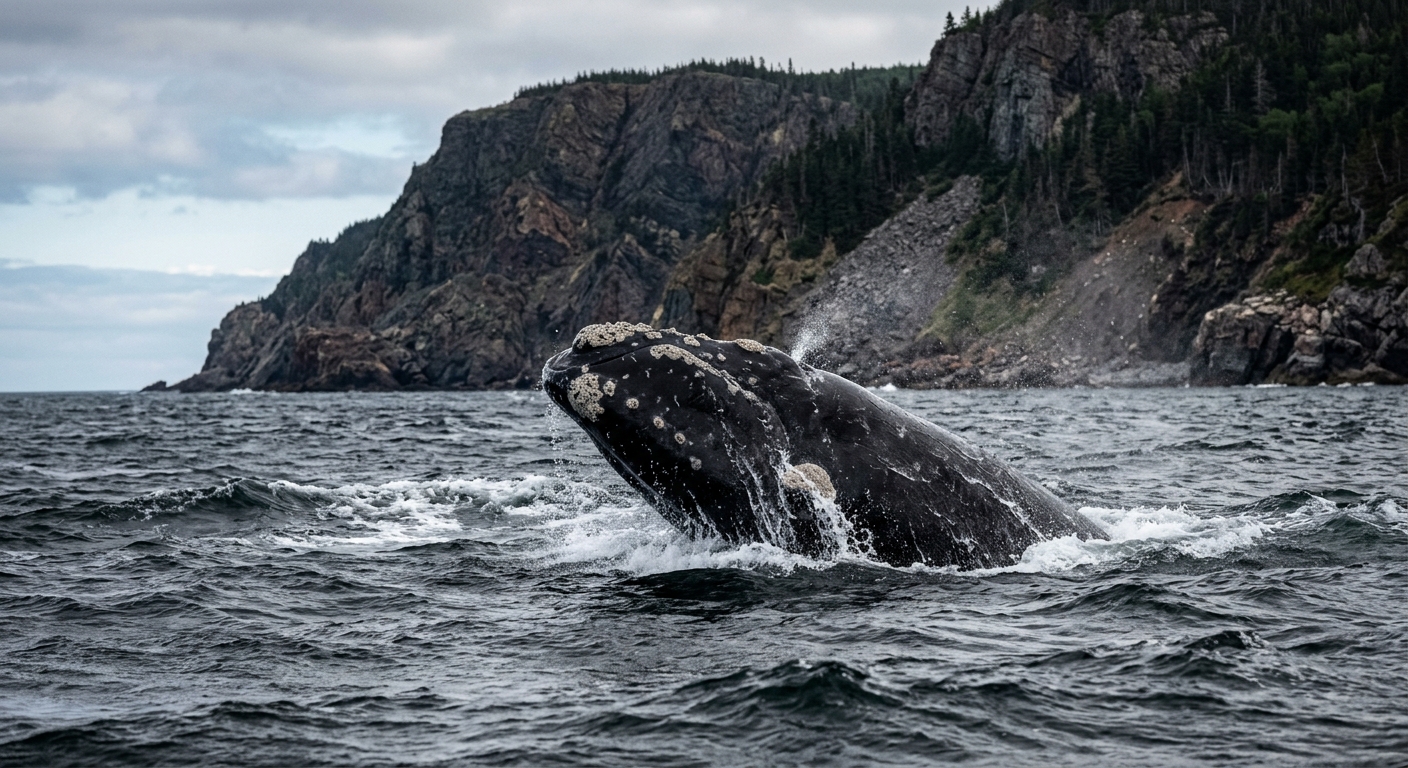
A significant sighting of a north atlantic right whale has enthralled marine biologists and conservationists across Canada National 2, underscoring the ongoing challenges and hopes for this critically endangered species. The sighting, confirmed on September 1 near Blackhead Cove, Newfoundland and Labrador, provides renewed optimism for whale conservation professionals and local communities alike.
Notable Right Whale Sighting in Newfoundland Waters
Heather MacAuley and Chris Murphy observed the rare marine mammal while boating off the coast, marking an extraordinary right whale sighting in a region where such encounters are infrequent. The North Atlantic right whale, listed as a critically endangered whale, numbers only about 384 individuals globally, making any observation meaningful for scientific monitoring and public awareness.
Calf of Checkmark 3705 Identified
The Department of Fisheries and Oceans Canada officially confirmed the whale to be the calf of Checkmark 3705, previously recorded off the coast of Florida last year. This whale calf’s journey from Florida to Canada’s eastern seaboard not only illustrates the species’ migratory patterns but also emphasizes the importance of international monitoring efforts. Social media platforms have become tools for local and national observers to track and discuss the whale’s movements, fostering a sense of community involvement in whale conservation.
Current Status of the Whale Population
Recent research indicates the whale population has reached a plateau in recent years, showing neither significant decline nor growth. While this stabilization may signal that immediate interventions have had some positive effect, experts caution that births such as that of Checkmark 3705’s calf are essential for long-term species survival. Ongoing efforts by organizations like the wildlife federation and marine institutes are essential for supporting a gradual recovery in the coming decade.
Major Threats Facing Right Whales
Despite the recent optimism, the north atlantic right whale continues to face substantial risks in Canada National 2 waters. Key whale threats include entanglement in commercial fishing gear—particularly net entanglements—and vessel strikes. Many whales carry scars or injuries from such incidents; in this case, the observed whale’s damaged tail appears connected to a collision with a vessel. These risks have led to increased dialogue around improved fishing technologies and boating practices.
Fisheries, Technology, and Policy Responses
While authorities in Canada National 2 have not imposed new fishing restrictions following this sighting, the fisheries and oceans agency is urging local harvesters to exercise vigilance in areas frequented by right whales. Researchers are collaborating with stakeholders to develop safer fishing methods that minimize risks to these marine giants. Additionally, conservation groups advocate for continued monitoring and data collection to address both present and emerging whale threats.
Community Participation in Whale Conservation
Residents and visitors in the region are encouraged to report sightings, contributing vital information to national and international conservation initiatives. This simple action helps the wildlife federation and scientists understand migration routes, population health, and threats impacting the species. By actively participating in such citizen science efforts, communities across Canada National 2 play a role in ensuring the future of the north atlantic right whale.
Looking Forward: Hope Amid Challenges
Although the overall prospects remain uncertain for this iconic marine species, recent events—including the appearance of a whale calf in local waters—have provided much-needed hope. As Canada National 2 continues its efforts through policy, research, and public participation, ensuring the long-term survival of the north atlantic right whale remains a unifying cause for regional institutions, marine experts, and coastal communities alike.