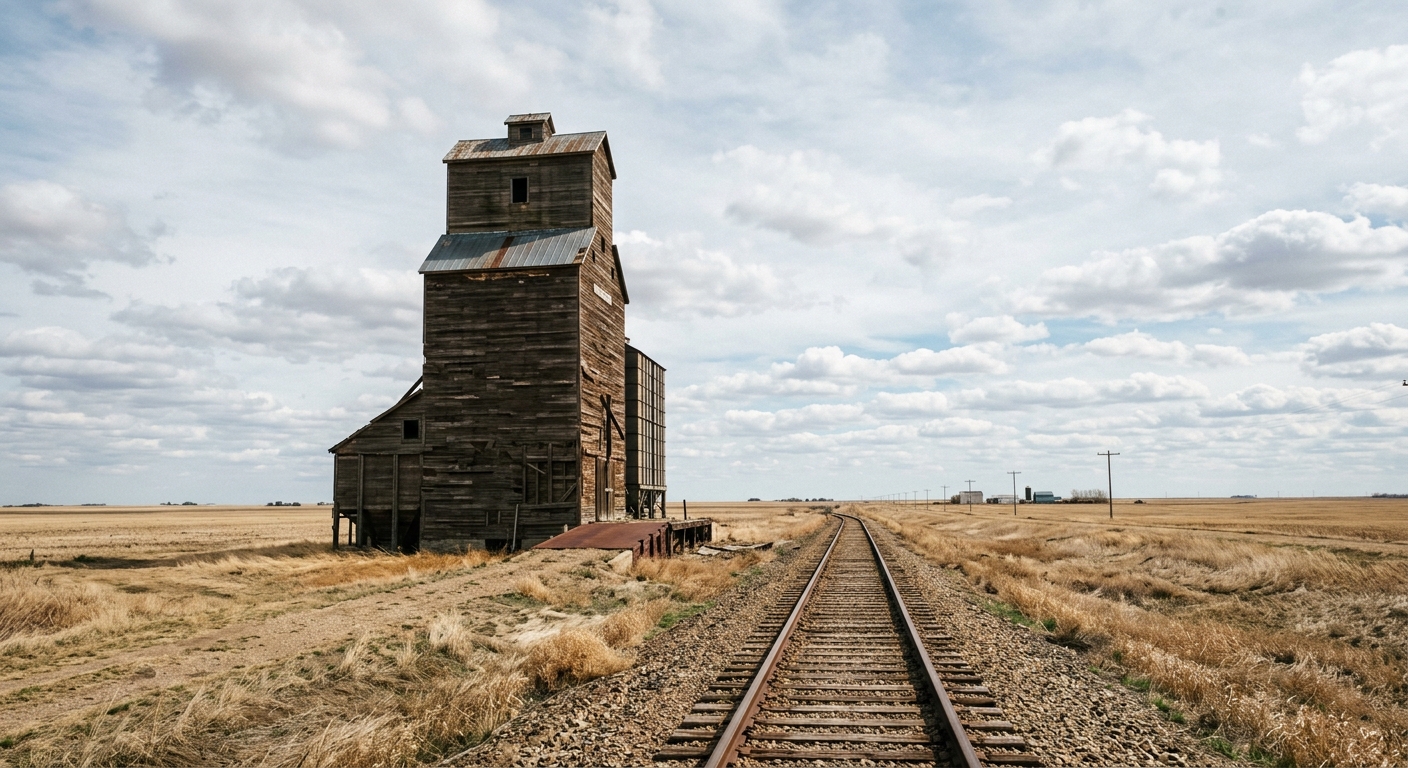
AI-generated illustration; not a photograph of the reported event.
- calendar_today October 12, 2026
The Fate of the Raymore Grain Elevator Hangs in the Balance
A long-standing symbol of prairie heritage in Saskatchewan is at risk, as the last grain elevator in the town of Raymore faces possible demolition. Owner Duane Kirstein is actively seeking buyers or even considering donating the structure to a historical society in hopes of preserving this historical landmark.
A Classic Prairie Landmark
The Raymore grain elevator, located about 115 kilometres north of Regina, was originally constructed in the 1960s to serve local farmers. By 2006, its active days were over, and Kirstein acquired the elevator to use as a grain storage facility. Since then, maintaining the large structure has become increasingly difficult.
Maintenance and Upgrades
Kirstein noted that significant investments have been made in the elevator over the years. The roofing was replaced, and nearly $50,000 was spent repainting parts of the structure. The facility remains in good condition and has a capacity to store between 180,000 to 200,000 bushels of grain. However, Kirstein explained that operational changes on his farm mean the elevator is no longer practical for his needs, especially after building new bins and with no way to dry grain at the elevator site.
Attempts to Sell or Donate
Efforts to transfer ownership have so far been unsuccessful. "We've offered it to the town and they don't want it," said Kirstein. Commercial interest has been limited, and while listing the elevator with a real estate company is an option, moving such a large structure poses logistical challenges. Because the building sits on leased Canadian National Railway property, if no new owner is found, costs for elevator demolition would fall on Kirstein.
Community Reflections on Prairie Heritage
Dianne Eckel, secretary treasurer of the Raymore Pioneer Museum, emphasized the elevator's role in the town's history. She expressed sadness at the potential loss, noting that similar structures have disappeared from many rural communities. Eckel referenced the local history book, From Prairie Wool to Golden Grain, recalling how earlier elevators were replaced by more modern, larger facilities. She also shared personal memories, as her father and husband once frequented the Raymore elevator.
The Broader Impact on Rural Communities
The gradual loss of such agricultural infrastructure marks the end of an era for areas like Raymore. Eckel reflected on how the skyline of prairie towns changes as elevators come down, with new, larger companies building different facilities. The disappearance of these landmarks can affect the identity and memory of rural communities that grew up around them.
Uncertain Future for the Raymore Elevator
If no buyer or historical group comes forward, the next step may be elevator demolition, erasing another piece of Saskatchewan grain and prairie history. Kirstein remains willing to donate the structure to an interested organization to save it from this fate. For now, the future of the Raymore elevator, a once vital part of local grain storage and wheat pool operations, remains in doubt.
Source: cbc.ca.