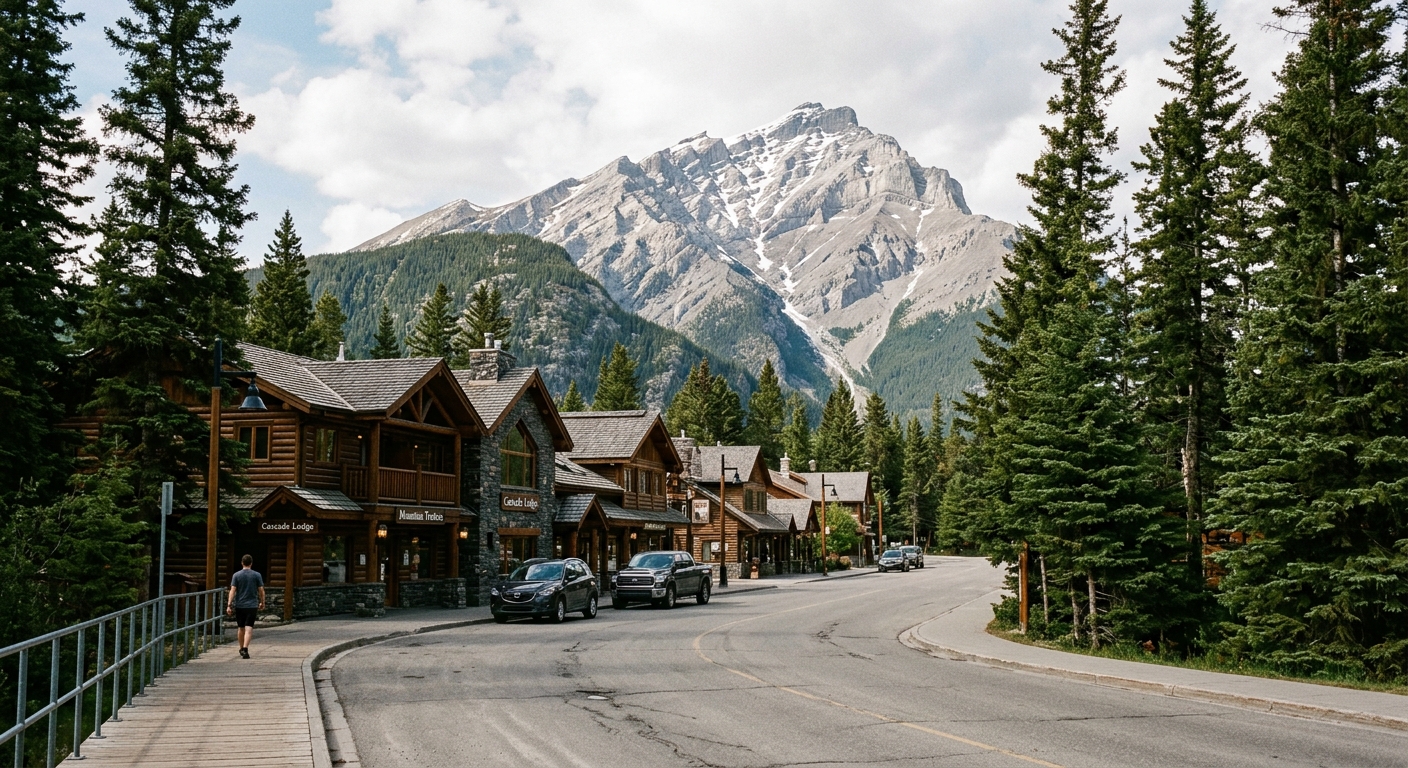
AI-generated illustration; not a photograph of the reported event.
- calendar_today October 11, 2026
Banff’s Unique Legal Status at the Heart of Alberta Separation Debate
The question of Alberta's potential separation from Canada has spurred debate and concern, particularly in the Town of Banff. Known for its thriving tourism industry and picturesque mountain setting, Banff's unique situation as a municipality on federal parkland raises key questions about governance and land ownership should Alberta choose to secede.
Banff Town: Federal Land, Provincial Services, Complicated Governance
Banff is a jurisdictional anomaly. Since its incorporation in 1990, the town has leased the land it sits on from the federal government for $550,000 a year. While residents own their homes, they lease the land from Ottawa. Local services like hospitals and schools are run by the province, but the federal government maintains veto power over most municipal bylaw changes. This complex structure underscores the challenges that secession negotiations would pose for Banff and similar communities, such as Jasper, which is also located on federal parkland in Alberta.
The Challenge of Secession Negotiation: Assets, Debts, and Boundaries
Political scientist Tom Urbaniak notes that separating from Canada would raise vast legal and practical questions, including how to divide assets, debts, and land. Past examples, like the dissolution of Czechoslovakia or the protracted Nisga'a Agreement negotiations in British Columbia, suggest these processes can take years and require extensive discussion. Urbaniak points out that the assumptions made by separatist movements — such as the indivisibility principle asserted by Quebec separatists — would be tested in Banff, where federal interests, Indigenous rights, and local needs all intersect. He describes the potential division of Banff as a 'perilous' and highly complex issue.
Banff Mayor's Plea and Community Concerns
Banff Mayor Corrie DiManno has publicly called on Albertans to reject the separation referendum, emphasizing the strong and longstanding partnership with Ottawa in areas such as conservation, wildfire prevention, and housing. Many residents and business owners fear potential consequences for tourism, which brought 4.5 million visitors to Banff National Park last year. Questions linger about mobility within the region—such as whether travel to nearby Canmore would require a passport—and the broader impacts on daily life. DiManno stresses that Banff's legal foundations are rooted in Treaty 7, which predates both Banff National Park and the province of Alberta. She emphasizes a collective responsibility to uphold treaty obligations that define relationships in the region.
Indigenous Rights, Treaty 7, and Legal Hurdles
Banff sits within Treaty 7 territory, an agreement signed 149 years ago that is fundamental to area governance. According to Urbaniak, any renegotiation or dissolution of treaties would require the direct consent of the affected First Nations to be legal and constitutional. Indigenous involvement in these discussions is vital, as reflected by a coalition of First Nations that has already filed a legal challenge to the referendum, arguing consultation has not occurred as required. Stoney Nakoda elder Alice Kaquitts highlights the spiritual connection First Nations have to the area and rejects the colonial notion of land ownership, emphasizing the traditional role of Indigenous stewards.
The Uncertain Path Ahead
The Alberta government, led by Premier Danielle Smith, has pressed ahead with a referendum on whether to consider separation, despite a court decision annulling a petition over lack of First Nations consultation. Smith’s office maintains it is committed to a unified Canada, while Parks Canada has stated it respects the democratic process but declined to predict outcomes of potential separation. As Albertans prepare to vote, the future of communities like Banff—and their complex ties with Indigenous peoples, federal authorities, and provincial government—remains deeply uncertain.
Source: cbc.ca.