- calendar_today August 17, 2025
President Donald Trump was “briefing” reporters on a European Union trade deal when he decided to take an unscheduled dig at renewable energy, as he so often does. The European Commission is a “con job,” the former president asserted at an event near the White House this month. Wind turbines will drive whales “loco” and “kill everything,” he added, joking that they’re so dangerous, they should be strung with Christmas lights for people to see. This was not just another improvised Trump quip. It’s the latest chapter in a long history of renewable energy denial, and it’s worth a closer look.
Trump is fond of mischaracterizing wind turbines as “windmills,” a slippage that has almost become its own in-joke among climate deniers. He isn’t the first person to accuse wind turbines of attacking marine life or to attribute a range of bizarre illnesses to their operation. In fact, such outbursts are symptoms of a pattern that runs much deeper and broader than a few provocative tweets: a history of global conspiracy theories about renewable energy—and wind in particular.
Two groups of studies help explain the resistance. One finds that anxieties about renewable energy are driven by cultural change as much as by facts or misinformation. The other demonstrates that these anxieties are “rooted in people’s worldviews.” Together, they show how a small but vocal contingent of climate skeptics and conspiracy theorists emerged over the past few decades.
The Roots and Rise of Anti-Wind Conspiracies
Climate science has known since at least the 1950s that carbon dioxide emissions could cause profound and relatively imminent environmental change. But the early history of renewables was also inextricably linked with the effort to break fossil fuel companies’ hold on energy systems.
Take The Simpsons, the iconic animated show. In one episode from the mid-1990s, the tycoon Mr. Burns builds a 4,000-foot tower to blot out the sun, forcing Springfield’s residents to purchase his nuclear power. The cartoon scenario was a satirical exaggeration, of course. But it tapped into real-world concerns that entrenched fossil fuel interests would work to delay renewable adoption.
In some ways, history showed those fears were not misplaced. Then, Australian Prime Minister John Howard called a meeting of fossil fuel executives in 2004 and charged them with advising the government on carbon emissions. The Low Emissions Technology Advisory Group they formed, was not tasked with encouraging rapid decarbonization, but rather with figuring out how to slow down the growth of renewables to protect coal, oil, and gas.
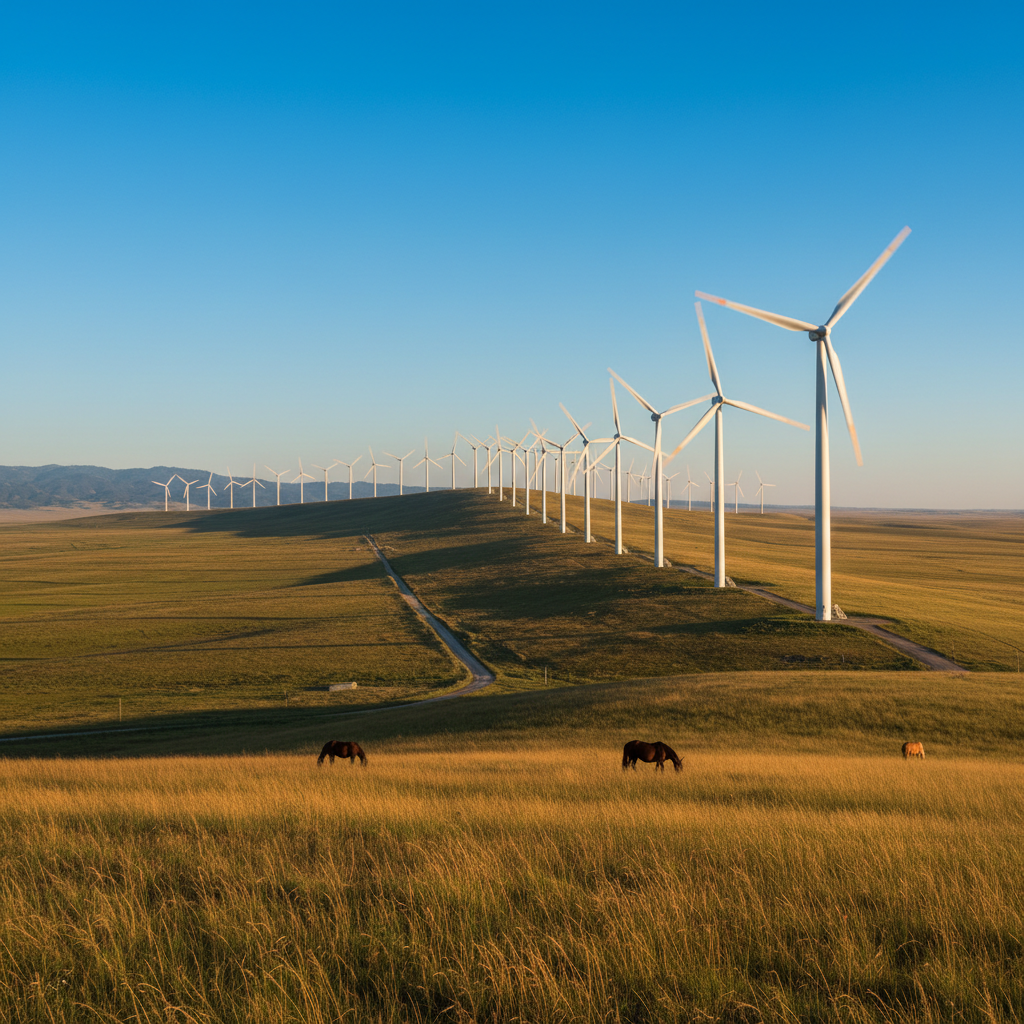
Public perception of wind farms also faced a series of obstacles. Coal mines and oil fields are rarely visible from residential areas, as are the massive, radioactive cooling towers of nuclear plants. Wind turbines are the opposite, often placed on ridgelines or open plains for maximum exposure to air movement. Their visibility made them a ready target.
Rumors that wind turbine syndrome—a “non-disease” in the words of medical experts—caused mass blackouts, poisoned groundwater, and increased the risk of cancer circulated for years despite a lack of supporting evidence.
Academic work also provides insight. A study led by Kevin Winter at the Helmholtz Centre for Environmental Research analyzed the factors that predict opposition to wind farms in Germany. Contrary to intuition, the data showed that age, gender, education level, and political affiliation were relatively poor predictors of support or opposition. Instead, the analysis identified a far stronger correlation between those who supported conspiracy theories and those who opposed wind farms. Similar research published in 2022 found that those more likely to agree with conspiracy statements across the U.S., U.K., and Australia—about climate change, government control, energy security, and other issues—were also more likely to consider wind turbines harmful.
For these populations, facts matter little. Showing evidence that wind farms do not poison groundwater or cause mass blackouts, for example, is unlikely to change most minds, because opposition to wind is about worldview rather than faulty information. “Opposition to wind turbines is related to people’s worldviews in a way that cannot be easily countered by correcting misunderstandings,” as Winter and his colleagues put it.
Wind farms are the product of major development approval processes that occur over many years. They are visible, large-scale projects that carry symbolic weight in a way that a solar panel on a suburban roof, for example, is unlikely to. For supporters, wind turbines represent progress, innovation, and climate action. To opponents, they’re an affront, an example of government overreach and loss of control.
Climate anxiety and cultural change run deep in this debate. At the heart of many climate and renewables controversies is a cultural rather than technological struggle over a changing world. Fossil fuels powered an era of unprecedented global prosperity, but for some, to confront their environmental costs is to admit the era had a dark side. Scholars have termed this effort to avoid reflection on the negative consequences of prosperity “anti-reflexivity.” Trump’s rhetoric, steeped in nostalgia for an earlier era of coal, oil, and gas, fits comfortably in this frame.