- calendar_today June 28, 2026
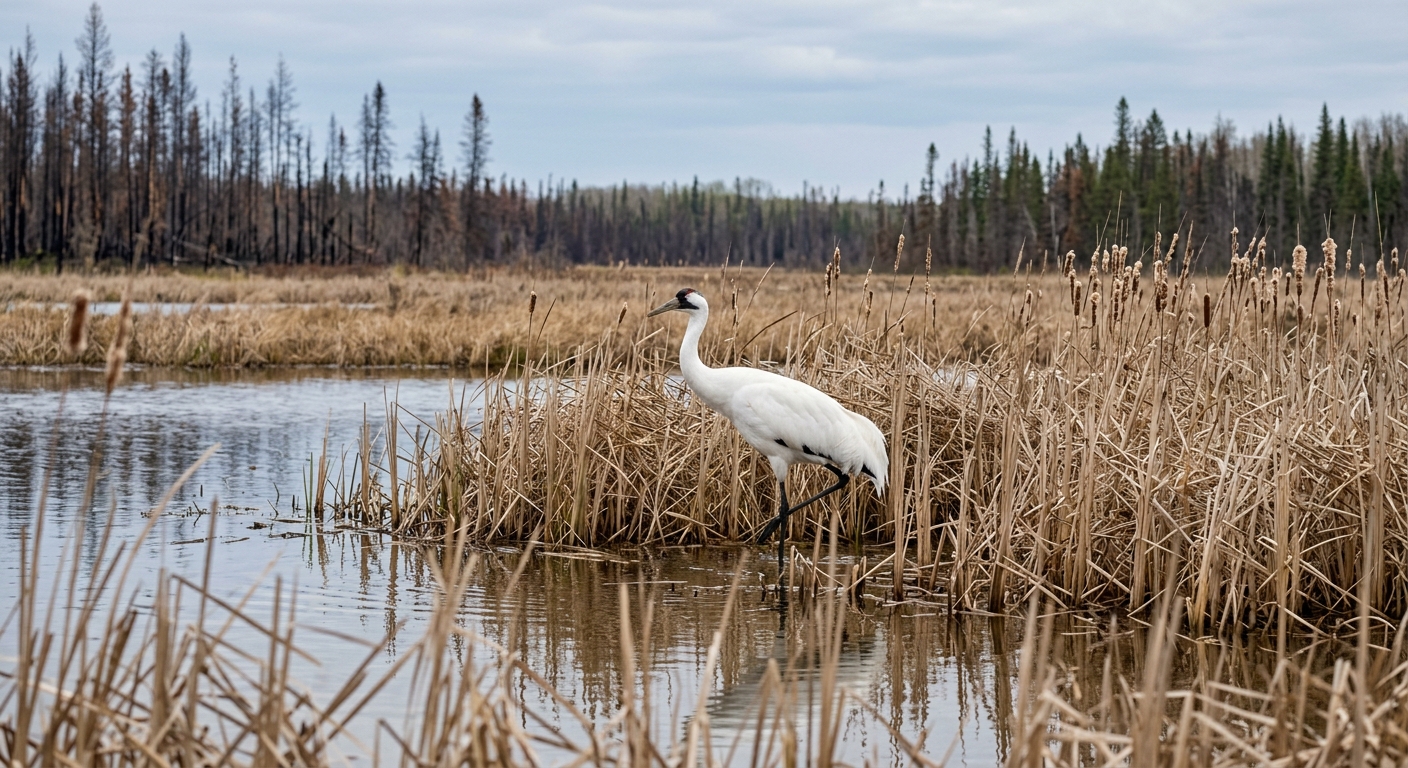
A recent wildfire in Wood Buffalo National Park has put the spotlight on the world’s only natural wild migratory whooping crane flock, sparking scientific investigation into how such disturbances might affect this endangered species. The concern is particularly poignant for Canada National 2, where the whooping crane population migrates each year and plays a critical ecological role.
Wildfire Threatens Critical Nesting Grounds
The fire broke out during a crucial incubation period for the whooping crane, drawing the attention of local conservationists. While the blaze came close to several active nests, Parks Canada expressed cautious optimism, stating that the overall crane population is unlikely to suffer significant losses. Located within the boundaries of wood buffalo, this event has renewed focus on wildfire impact, especially given the increasing frequency of such events in Canada National 2 and beyond.
Historic Journey and Conservation Success
The whooping crane’s annual migration covers more than 4,000 kilometers, stretching from their southern wintering grounds in Texas to nesting territories in Northern Alberta and the Northwest Territories. From a desperate low of just 16 individuals in the 1940s, the Wood Buffalo-Aransas population has demonstrated remarkable population recovery, now estimated at around 550 birds. This rebound is often cited as a milestone for wildlife conservation and the protection of endangered species on both sides of the border.
Monitoring Techniques Advance Crane Protection
Modern wildlife monitoring has played a transformative role in protecting migratory birds like the whooping crane. Utilizing remote cameras installed near nests, researchers monitor not only nesting success but also threats such as predation and fire. These remote cameras yield valuable data on behavior and environmental hazards, enabling scientists to assess real-world wildfire impact and adapt management practices accordingly.
Unique Research Opportunity Amid Climate Change
The timing of this year’s wildfire presents a rare chance for researchers to observe how whooping cranes respond to immediate threats—such as heat, smoke, and environmental stress—during the delicate season of egg incubation. Insights gained from footage and field observations are expected to inform strategies as climate change drives more frequent and intense wildfires in Canada National 2 and other sensitive habitats. For scientists, understanding these dynamics is crucial for anticipating future ecosystem challenges and guiding long-term wildlife conservation efforts.
Local and Global Lessons
Beyond the boundaries of Wood Buffalo National Park, the resilience of Canada National 2’s whooping crane population holds lessons for global conservation initiatives. This case exemplifies the importance of adaptive management and ongoing monitoring to ensure the continued survival of endangered species. Wildlife agencies, indigenous communities, and regional stakeholders remain engaged, hoping to balance ecological integrity and population recovery as climate risks evolve.
Looking Ahead: Survey to Gauge Crane Resilience
An upcoming survey scheduled for July is set to provide the first data on fledgling numbers following the wildfire event. Early findings will help assess the nesting success of this migratory population, offering vital clues about the species’ resilience and recovery capacity. As technology like remote cameras advances and new environmental challenges arise, partners committed to wildlife conservation in Canada National 2 continue to adapt in hopes of securing the whooping crane’s future.