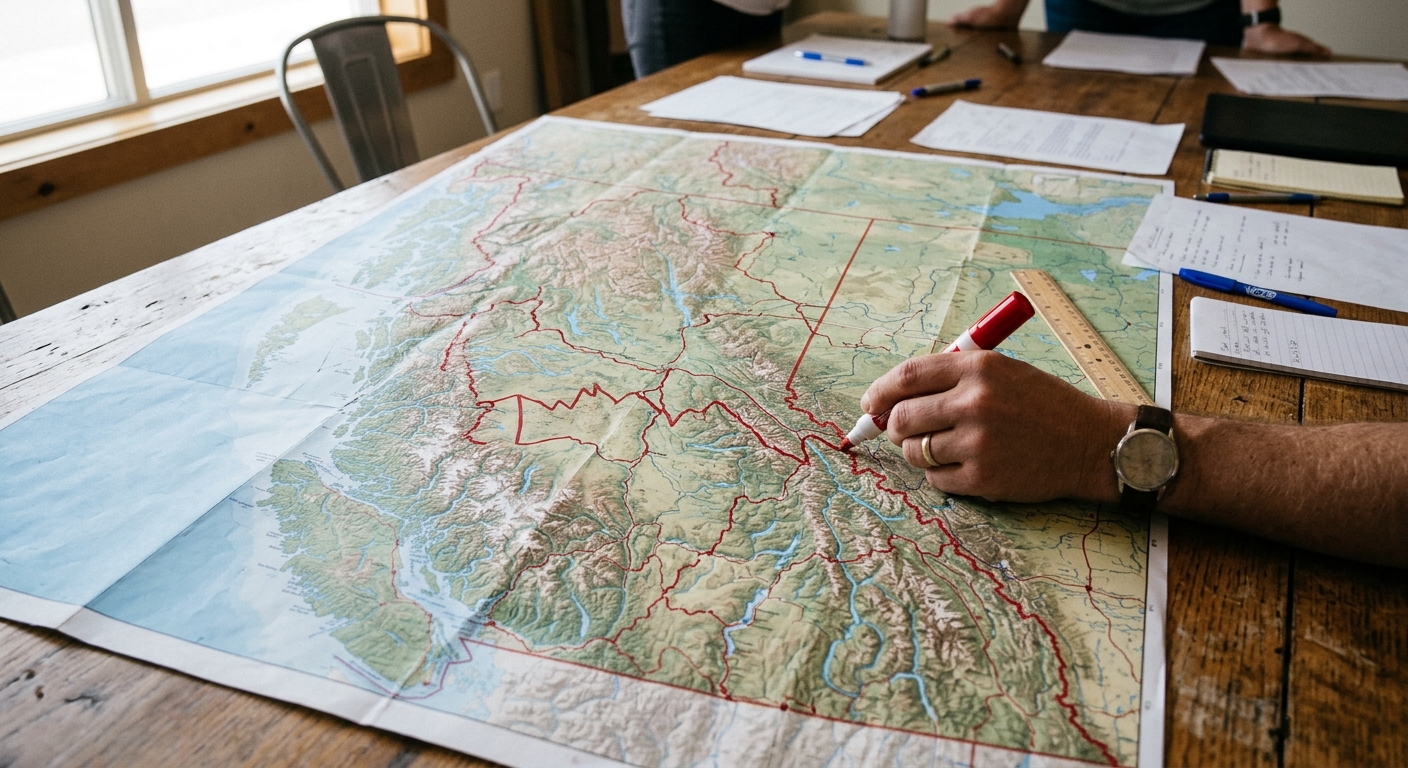
AI-generated illustration; not a photograph of the reported event.
- calendar_today November 8, 2026
Electoral Boundary Redrawing in Alberta Faces Accusations of Gerrymandering
The process of redrawing Alberta's electoral boundaries has become unusually contentious this year, as political observers and party leaders raise alarms over what some describe as "American-style gerrymandering." The typically routine process has drawn attention since the release of the latest boundaries report, prompting calls to rethink how the province creates its electoral map to avoid partisan influence.
NDP Leader Criticizes Proposed Alberta Electoral Map
Alberta NDP Leader Naheed Nenshi publicly criticized the proposed changes, describing them as a "Trump-style MAGA gerrymandered map." He claims the new boundaries have been designed to favor the governing United Conservative Party (UCP), thereby potentially diminishing the influence of urban voters. In particular, some urban Lethbridge residents would be merged with surrounding rural areas, sparking concerns about the dilution of urban votes.
Government Response and Political Tensions
Premier Danielle Smith defended the proposal, arguing that rural-urban hybrid ridings are common in Alberta and serve their communities effectively. She emphasized the precedent for combining different communities in a single riding, dismissing suggestions of partisan redistricting. Amid the debate, Alberta’s Justice Minister Mickey Amery maintained in the legislature that the current redistricting process is both non-partisan and independent.
Breakdown in Political Norms and Commission Disagreements
The current controversy began after a bipartisan commission released a new electoral map proposal last spring. In a break from standard practice, the two UCP members on the commission presented their own opposing report and map, sparking division. Subsequently, both the original and dissenting maps were rejected by the government. This led to the formation of a second commission, composed by a UCP-majority committee, which developed a third map now under consideration by the legislature.
Mount Royal University’s Dr. Lori Williams identified this process as a breakdown in established political norms. She highlighted the importance of having independent or multi-partisan bodies oversee electoral boundaries to ensure public trust and fairness. "It's the violation of that standard, that norm that's causing so much controversy here," Williams stated.
Expert Perspectives on American Influences and Possible Reforms
Greg Anderson, a political science professor at the University of Alberta, noted parallels between Alberta’s situation and the partisan redrawing commonly seen in the United States. He pointed out that in the U.S., redistricting is frequently driven by attempts to gain political advantage, resulting in maps that are often challenged in court. Anderson suggested that combining urban and rural voters, as seen in the proposed Alberta map, could lead to similar concerns.
Richard Sigurdson, a political science professor at the University of Calgary, advocated for reforms in Alberta’s boundary-making process. Drawing from his experience on Manitoba’s 2008 electoral boundaries commission, Sigurdson recommended adopting a structure free from partisan appointments. Manitoba’s commission includes the chief justice, chief electoral officer, and three university presidents, promoting a non-partisan and independent approach. Sigurdson argued that removing partisanship would reduce criticism and rebuild confidence in the redistricting process.
Potential Legal Challenges
The Alberta NDP has threatened to pursue legal action on constitutional grounds if the proposed map is enacted. This potential for court battles mirrors the high stakes often seen in U.S. redistricting disputes, underscoring the seriousness of the current debate in Alberta.
Looking Ahead
As the Alberta legislature prepares to consider the latest electoral boundary proposal, calls for a more transparent and independent process continue. Experts warn that unless clear rules and non-partisan mechanisms are adopted, controversy and legal challenges are likely to persist each time the province redraws its electoral map.
Source: cbc.ca.