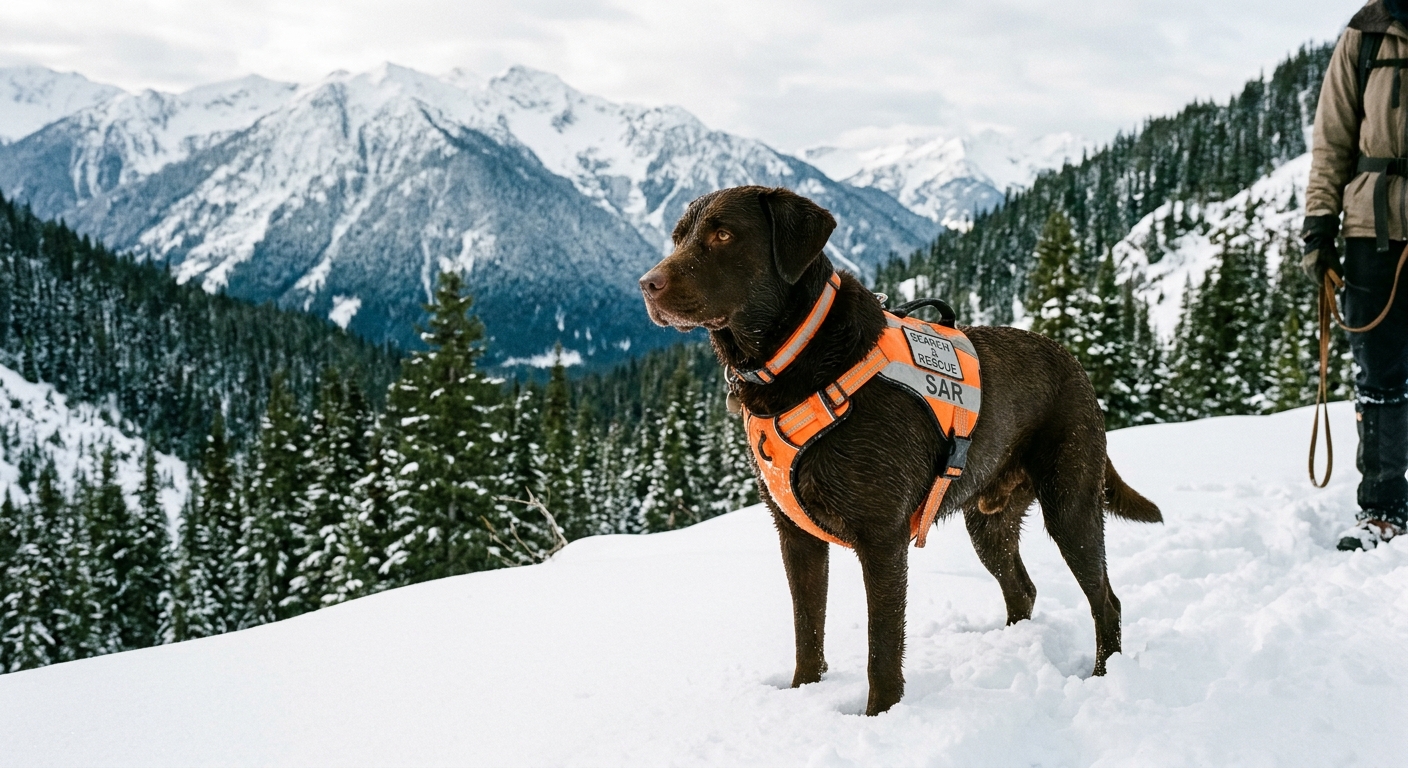
AI-generated illustration; not a photograph of the reported event.
- calendar_today November 8, 2026
Search and Rescue Dog Associations Raise Alarm Over Parks Canada Cuts
The Canadian Avalanche Rescue Dog Association (CARDA) and British Columbia Search Dog Association (BCSDA) are urging Parks Canada to immediately reverse its decision to eliminate the K9 search and rescue program based in Banff National Park. The groups say the move increases risks to both rescuers and the Canadian public, particularly as avalanche season gets underway.
Concerns Over Avalanche Rescue Capabilities
Kyle Hale, president of CARDA, emphasized the importance of specially trained search and rescue dogs in mountainous terrain and severe weather. "Search and rescue dogs can be dropped with their handler into an avalanche scene and are more likely to quickly find a person or people missing," Hale explained. He contrasted this with manual avalanche probing, which could require hours or days and expose more people to hazard. According to Hale, the discontinuation of Parks Canada's K9 program creates a significant gap in Canada's rescue dog capacity, especially since the program also provided vital instruction for civilian dog handlers.
Program's Role in National Rescue Efforts
The Parks Canada K9 program, which has existed since 1971, once included six dogs but in recent years had only one active team. These handlers and their dogs were employed not only in Banff National Park but across the country, locating avalanche victims and missing people. The most recent team included Logan Bennett and his dog Leroy, who retired in the summer at age seven after locating 57 missing people and tracking more than 150. Leroy was instrumental in searches such as the Bow Glacier Falls rockfall operation. The program also backed enforcement operations for park wardens during high-risk calls.
Lack of Consultation and National Impact
In their letter to Parks Canada and Environment and Climate Change Canada, CARDA and BCSDA presidents expressed concern over a lack of stakeholder engagement, stating there was "zero consultation and zero outreach" prior to the decision. Parks Canada's internal communications reportedly revealed plans to rely on volunteers from the associations to fill the operational gap, at least in the short term. The organizations stress that the cancellation was made "in isolation, without broad consultation with stakeholders and without a full understanding of the nationwide implications." Both Parks Canada and CARDA are members of the International Commission for Alpine Rescue, which endorses the use of avalanche rescue dogs in mountain rescue efforts. The associations claim, "We cannot think of any jurisdiction in the world that is not currently utilizing avalanche rescue dogs for winter mountain rescue response."
Parks Canada's Response and Budget Reductions
Parks Canada is in the process of implementing $145 million in budget cuts over three years, following a federal directive to reduce public sector spending by 10 to 15 percent. The agency described the cancellation as part of efforts to modernize its law enforcement model and prioritize high-risk areas. According to spokesperson Meaghan Bradley, "park wardens are trained and equipped to enforce the Canada National Parks Act without the use of dogs." Parks Canada is also eliminating 13 warden detachments and reducing the warden force nationwide, shifting some positions and hiring regional intelligence coordinators.
Public Outcry and Parliamentary Petition
The program's cancellation has drawn significant public and political response. William Stevenson, Member of Parliament for Yellowhead—the riding including Banff and Jasper national parks—recently presented a petition in the House of Commons with more than 11,500 signatures calling for reinstatement. Stevenson also sent a letter to Environment, Climate Change and Nature Minister Julie Dabrusin and the Parks Canada interim CEO, seeking clarification on the decision and estimated savings. In Parliament, Stevenson stated, "For decades, these highly trained dogs have saved lives, located missing people and supported avalanche rescues."
Uncertain Future for Avalanche Season
With avalanche season beginning, both search dog associations are attempting to develop a "short-term Band-Aid solution." However, both organizations maintain that the elimination of the Parks Canada K9 program represents a major setback for rescuer and public safety in Canada's mountain parks.
Related coverage
Source: cbc.ca.