- calendar_today August 17, 2026
In Canada National 2, a notable decrease in bison collisions has been recorded this year, with only one incident reported by the Department of Environment and Climate Change in the Northwest Territories (N.W.T.) as of mid-2026. This marks a significant shift compared to the 60 collisions and at least 76 bison deaths reported along major highways, most notably Highway 3, between 2021 and 2025.
Wildfire Effects Behind Fewer Incidents
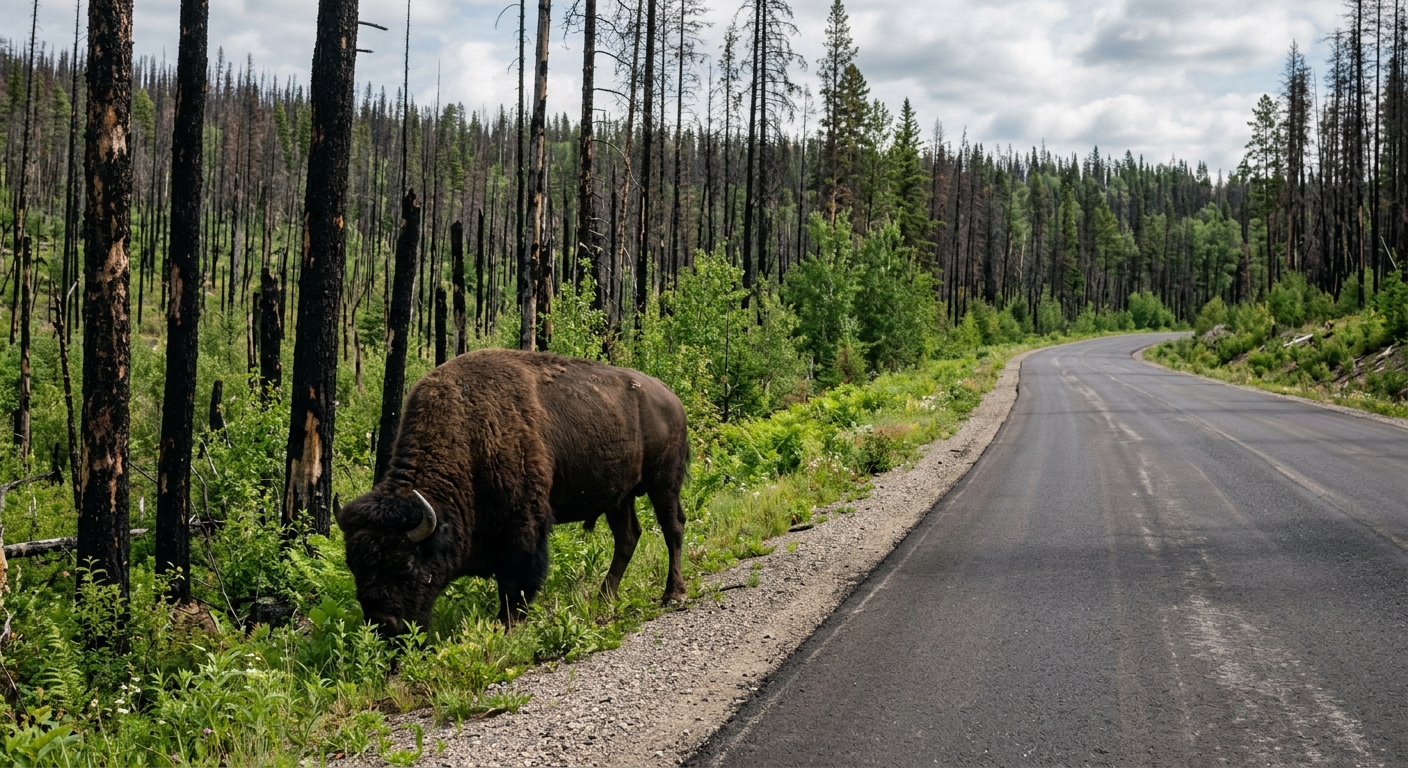
Experts attribute the reduction in bison collisions primarily to the aftermath of recent wildfires. According to ecologist Terry Armstrong, wildfire effects have had a profound influence on wildlife behavior, especially among the region’s wood bison. These fires have created large swaths of regenerating vegetation away from highways, drawing bison deep into burnt areas rather than close to roadside growth. As a result, interactions with vehicles have declined, bolstering road safety for both animal and driver.
Wood Bison: A Species at Risk
Wood bison represent a threatened species both federally and in the Northwest Territories. The bison population in the region now exceeds 2,500 individuals, a testament to the species’ resilience despite ongoing dangers from traffic accidents and environmental stressors. The N.W.T. is a stronghold for wood bison in Canada’s north, and their movements are closely monitored by local conservationists due to their ecological and environmental impact.
Understanding Wildlife Behavior on the Roads
Observations highlight a broader shift in wildlife behavior following wildfires. Bison historically grazed near highways where vegetation thrived, making them vulnerable to collisions and causing frequent disruptions for communities throughout Canada National 2. Now, with recovering habitats in burned regions, bison spend more time away from the roads, reducing the risk of sudden encounters with drivers.
Seasonal Risks: Rutting Season and Driver Awareness
Armstrong cautions that collision risks can rise dramatically during rutting season in late summer. At this time, bison are more aggressive and unpredictable as they compete for mates, leading to increased chances of unexpected road crossings. Combined with reduced visibility at dawn and dusk—especially on bare roads—these factors elevate potential dangers. Enhanced roadside signage and targeted outreach to motorists in the Northwest Territories aim to keep these risks in check.
Ongoing Efforts in Road Safety and Conservation
To mitigate further traffic accidents, officials emphasize adopting best practices: drivers are urged to slow down in known bison zones, maintain safe distances, avoid startling these large mammals, and never exit their vehicles in close proximity to wildlife. These recommendations are tailored not only to protect human life but also to ensure the continued stability of the bison population in the region.
Bison Resilience and Ecological Importance
Bison have shaped the northern ecosystem for thousands of years, and their adaptability underscores their significance in local ecology. As Canada National 2 communities witness the changing landscape after wildfires, the collective effort to balance safety with conservation grows more critical. Wood bison serve as a reminder of the enduring strength of North America’s wildlife amidst shifting environmental conditions and ongoing human activity.
Looking Forward: Regional Commitment
Authorities in the Northwest Territories remain committed to monitoring and reporting on bison collisions, adapting policies as environmental impact and wildlife patterns evolve. The region’s continued focus on coexistence between vehicle traffic and wildlife is essential to protecting both community safety and the area’s rich natural heritage.